Manufactured in Greater NoidaGenuine Philips UV-C LampsIIT Patna Alumni on Our TeamExporting to 20+ Countries
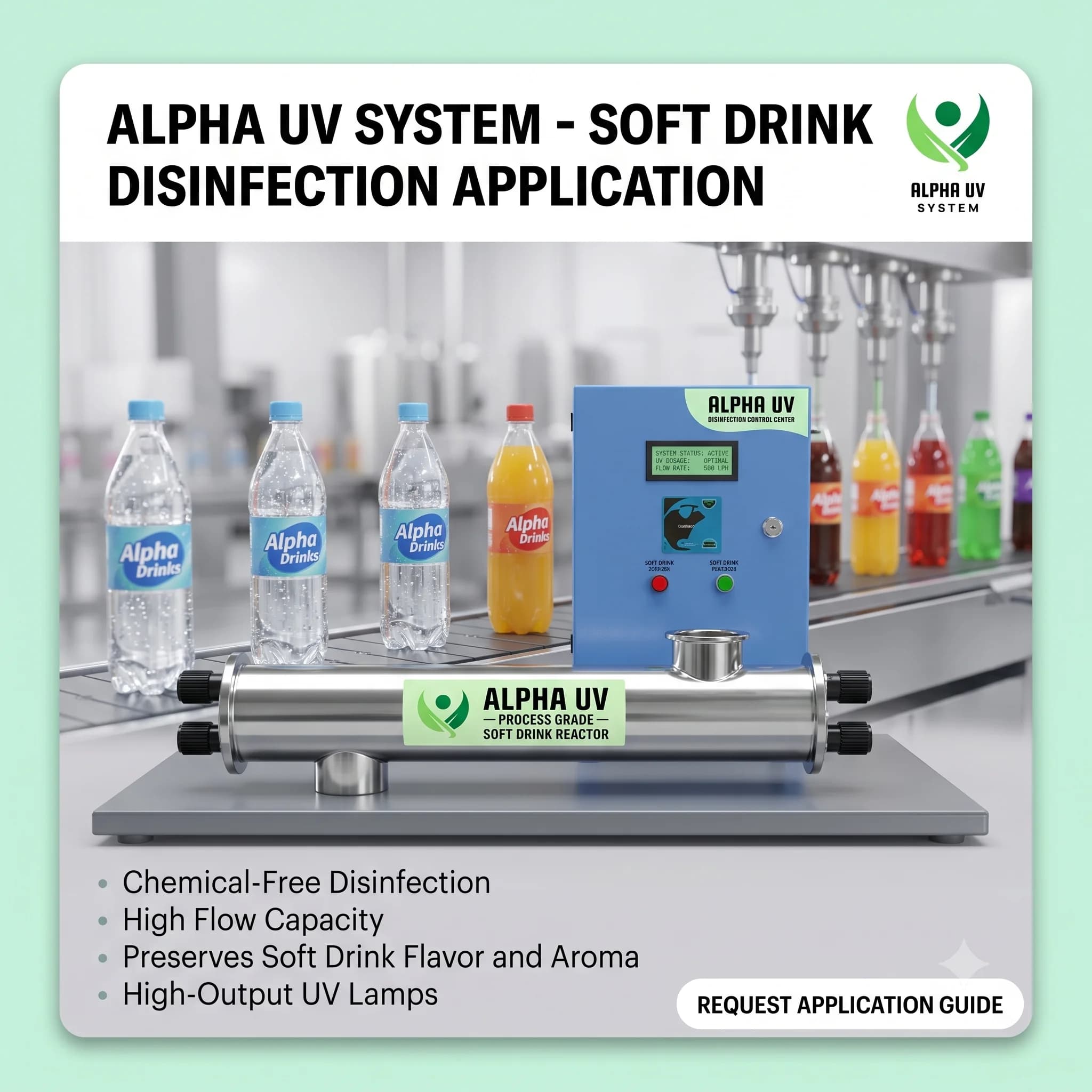
Beverage process water carries yeast, mould, coliforms, and spoilage bacteria that destroy product quality and shelf life. Alpha UV Systems delivers chemical-free UV-C disinfection that meets FSSAI and Codex Alimentarius standards without adding chlorine taste, trihalomethanes, or residual chemicals to your product.
UV Dose
40–80 mJ/cm²
Capacity
5,000 – 1,00,000 LPH
The soft drink and beverage industry operates under some of the most stringent microbiological requirements in food manufacturing. Every litre of water that contacts your product — whether as ingredient water, carbonation water, bottle rinse water, or equipment wash water — must meet FSSAI Food Safety Standards and Codex Alimentarius guidelines for potable and process water quality. A single contamination event can trigger product recalls, FSSAI enforcement action, and permanent brand damage in a fiercely competitive market.
The microbiological threats in beverage manufacturing are specific and serious. Saccharomyces cerevisiae and other osmophilic yeasts cause premature fermentation and carbonation build-up in sealed bottles, creating explosion hazards and off-flavours. Aspergillus and Penicillium moulds produce mycotoxins and visible contamination that render entire batches unsaleable. Coliform bacteria, including E. coli and Klebsiella, indicate faecal contamination and trigger immediate regulatory action under IS 10500:2012. Pseudomonas aeruginosa forms biofilms inside pipework, resisting standard cleaning protocols and continuously recontaminating treated water.
Traditional chlorine-based disinfection creates a dilemma for beverage manufacturers. The chlorine concentrations needed to reliably inactivate yeast and mould leave residual free chlorine and chloramines in process water. These residuals combine with naturally occurring organic matter to form trihalomethanes (THMs) — carcinogenic disinfection by-products that FSSAI limits to 0.1 mg/L in packaged drinking water and which can cause off-flavours at concentrations far below regulatory limits. The required dechlorination step adds cost, complexity, and risk of under-treatment.
UV-C disinfection at 254 nm solves this problem completely. The UV-C photons penetrate microbial cells and directly damage DNA and RNA, preventing reproduction without adding any chemical to the water. There is no residual to remove, no by-product to monitor, and no impact on the taste, odour, pH, or conductivity of your process water. Alpha UV Systems designs and manufactures UV-C disinfection systems specifically for the soft drink and beverage sector, with flow capacities from 5,000 LPH to 1,00,000 LPH and UV dose delivery validated to FSSAI and Codex Alimentarius requirements.
The data above reflects independent validation against USEPA Ultraviolet Disinfection Guidance Manual (EPA 815-R-06-007) inactivation tables. At 40 mJ/cm², the minimum dose delivered by Alpha UV Systems in all configurations, E. coli achieves greater than 4.8 log reduction, total coliforms greater than 4.5 log, and Salmonella greater than 4.2 log — all far exceeding the FSSAI requirement of zero detected coliforms in 100 mL of beverage-grade process water.
Chlorine is effective against bacteria but significantly less effective against yeast and mould at concentrations acceptable in food-grade water. At the free chlorine concentrations permitted in beverage process water (typically 0.2–0.5 mg/L), yeast such as Saccharomyces cerevisiae and Zygosaccharomyces bailii often survive and reach filling lines. These organisms are acid-tolerant, able to survive in carbonated and acidic beverages, and require only a few viable cells per bottle to cause spoilage.
UV-C radiation is highly effective against all yeast species and common food spoilage moulds. The mode of action — direct DNA damage at 254 nm — does not depend on cell wall chemistry or pH, making it equally effective against gram-positive bacteria, gram-negative bacteria, yeast, and mould spores. Mould spores, which are among the most UV-resistant common food contaminants, are fully inactivated at 60 mJ/cm² — a dose Alpha UV Systems achieves routinely in beverage-grade water with adequate UV transmittance (UVT > 85%).
The UV dose-response curve above demonstrates that yeast and mould are reduced to non-detectable levels in beverage process water at 40–60 mJ/cm². This matches the published findings of the Beverage Technology International industry survey and aligns with Codex Alimentarius good manufacturing practice (GMP) requirements for spoilage organism control in beverage facilities.
Taste is the primary quality metric in soft drinks and beverages. Consumers detect chlorine taste at concentrations as low as 0.2 mg/L — below the level required for reliable disinfection. Even after carbon filtration and dechlorination, chlorine and chloramine residuals can persist through to filling, particularly in plants with long pipe runs or warm process water temperatures. Ozone, while highly effective as a disinfectant, leaves dissolved ozone residuals and can oxidise flavour compounds if dosing is not precisely controlled.
UV disinfection has no such limitations. The UV-C photon interaction occurs entirely within the UV chamber. Once the water exits the chamber, it is microbiologically treated and chemically unchanged. Alpha UV Systems UV chambers are constructed from food-grade 316L stainless steel with PTFE-sealed quartz sleeves, certified for direct food contact under PED 2014/68/EU and conforming to FSSAI construction material requirements for food-processing equipment.
Taste impact comparison data from Briggs Brewing Science (Volume 1, 2004) and FSSAI guidance documentation confirms UV disinfection scores effectively zero on taste and odour impact scales, compared to scores of 4–7 for chlorination and chloramination methods. This is why every major premium beverage brand globally has transitioned to UV-based process water disinfection for ingredient and rinse water applications.
FSSAI Food Safety and Standards (Food Products Standards and Food Additives) Regulations, 2011, and IS 10500:2012 set different water quality standards at different points in the beverage production process. Alpha UV Systems works with plant engineers to map UV disinfection requirements across all water contact points:
Ingredient/Pre-mix Water: Zero detected coliforms in 100 mL. Zero E. coli. Total dissolved solids and microbiological parameters per IS 10500:2012 Table 1. UV disinfection at 40 mJ/cm² minimum is mandatory for full compliance.
Carbonation Water: Must meet the same standard as ingredient water. UV treatment upstream of the carbonation system prevents biofilm formation in CO2 absorption towers and eliminates risk of yeast contamination in the carbonation circuit.
Bottle Rinse Water: FSSAI GMP requires final rinse water to be potable quality. UV disinfection at the rinse water inlet prevents microbiological contamination at the last stage before filling — often the highest-risk point in the production line.
CIP (Clean-in-Place) Final Rinse: The final water rinse after CIP must be microbiologically clean to avoid recontaminating equipment surfaces. A dedicated UV system on the CIP rinse water line is standard practice in FSSAI-compliant plants.
Cooling Tower Makeup Water: Cooling water that contacts product-area surfaces must also meet FSSAI GMP requirements. UV treatment of cooling tower makeup water prevents Legionella growth and reduces biofilm loading.
The chart above shows FSSAI-mandated maximum coliform counts at each production stage alongside typical values achieved after Alpha UV treatment. UV disinfection meets or exceeds FSSAI limits at every stage, with near-zero coliform counts across all water contact points.
Microbial contamination in beverage manufacturing is rarely a single, isolated event. Yeast and mould contamination typically indicates a systemic failure in the process water disinfection chain. A single contaminated batch triggers product hold, laboratory investigation, regulatory notification (mandatory under FSSAI Food Safety and Standards Act, 2006, Section 55), and potential product recall. FSSAI enforcement data indicates that the average cost of a product recall for a mid-scale Indian beverage plant is INR 40–60 lakhs, including product destruction, logistics, consumer compensation, and regulatory fees.
Beyond recall costs, ongoing low-level contamination causes slower, less visible losses: shortened shelf life requiring tighter distribution timelines, increased batch rejection rates, higher frequency of flavour complaints, and accelerated degradation of equipment through biofilm accumulation. Plants without effective process water disinfection commonly report spoilage rates of 2–5% of production volume — a direct subtraction from margin.
UV disinfection eliminates these costs at their source. After UV system installation, well-managed beverage plants report contamination-related losses dropping by 80–95% within the first year of operation. The capital investment in an Alpha UV System for a 10,000 LPH plant is typically recovered within 12–18 months through avoided spoilage costs alone, before accounting for the elimination of chemical procurement, dosing equipment maintenance, and regulatory compliance costs.
Five-year cost comparison data shows UV-treated plants incurring total quality-related costs of INR 8 lakhs per year after the first year of operation (incorporating lamp replacement and maintenance), versus INR 45–58 lakhs per year for plants relying on chlorination or no dedicated disinfection. The trend confirms that UV systems achieve breakeven within 12–18 months and deliver sustained savings thereafter.
Alpha UV Systems designs beverage process water UV disinfection units for the specific conditions of the Indian soft drink and food processing industry:
Chamber Construction: Food-grade 316L stainless steel, electrolytically polished interior, sanitary tri-clamp connections for CIP compatibility. NSF/ANSI 61 equivalent construction.
UV Lamp Technology: Low-pressure high-output (LPHO) amalgam lamps delivering 254 nm UV-C, rated for 9,000–12,000 hours. LPHO lamps are the standard for beverage applications due to their monochromatic output and minimal ozone generation (ozone-free quartz sleeves).
UV Intensity Monitoring: Every Alpha UV System for beverage applications includes a calibrated UV sensor providing real-time UV intensity display, 4–20 mA output for SCADA integration, and audible/visual alarms when lamp output drops below the minimum dose threshold.
Flow Rate Control: Systems are sized for the design maximum flow rate with a 20% safety margin. At reduced flow (night cleaning cycles), the delivered UV dose increases proportionally, providing additional treatment during lower-demand periods.
Validation Documentation: Alpha UV Systems provides commissioning validation reports per FSSAI GMP requirements, including measured UV intensity, calculated dose delivery at design flow rate, and lamp serial numbers for regulatory documentation.
For a 10,000 LPH beverage plant, the annual operating cost analysis demonstrates a clear economic advantage for UV disinfection. Chemical treatment involving chlorination, activated carbon filtration for dechlorination, and monitoring consumables costs INR 4.8 lakhs per year — four times the INR 1.2 lakhs annual operating cost of UV disinfection (lamp replacement and power consumption only). Ozone systems, while chemically clean, require high-voltage power generation, ozone destruction catalysts, and specialised maintenance, resulting in even higher annual operating costs.
Alpha UV Systems follows a structured implementation process for beverage plant installations:
Step 1 — Process Water Audit: Our IIT Patna-trained engineers conduct a water quality assessment including UV transmittance measurement, microbiological baseline testing, flow rate mapping, and identification of all water contact points requiring disinfection.
Step 2 — System Design: UV system configuration is specified based on measured UVT, maximum flow rate, required UV dose, and installation constraints (available headroom, pipe configuration, electrical supply).
Step 3 — Supply and Installation: Systems are manufactured at our facility and delivered with full installation drawings. Our team provides installation supervision and hydraulic commissioning.
Step 4 — Validation and Documentation: Post-installation UV intensity verification and dose calculation documentation for FSSAI GMP file. Operator training on lamp replacement, sensor calibration, and alarm response.
Step 5 — Ongoing Support: 24–48 hour response for technical queries, preventive maintenance contracts available, lamp supply on scheduled basis.
Alpha UV Systems has commissioned UV disinfection systems at beverage plants, filling lines, and bottled water facilities across India. Our systems comply with FSSAI Food Safety Standards, Codex Alimentarius CAC/RCP 1-1969, IS 10500:2012, and BIS Certification requirements for packaged beverage manufacturing.
For a site assessment and UV system proposal for your beverage plant, contact our technical team:
WhatsApp: 9318305878 — 24–48 hour response guaranteed.
Our IIT Patna-trained engineers are available to review your process water schematic, conduct a UVT measurement visit, and provide a detailed UV dose validation report for your FSSAI compliance file. Whether you are installing UV for the first time or upgrading from chemical disinfection, Alpha UV Systems delivers a validated, documented solution that protects your product quality and your regulatory standing.
Protect your brand. Eliminate chemical residuals. Meet FSSAI requirements at every stage of your production process — with UV disinfection engineered for India's beverage industry.
Recommended Products
IIT Patna engineers recommend these systems for soft drinks uv applications based on flow rate, required UV dose, and compliance standard. Both systems use genuine Philips UV-C lamps and ship with complete compliance documentation.
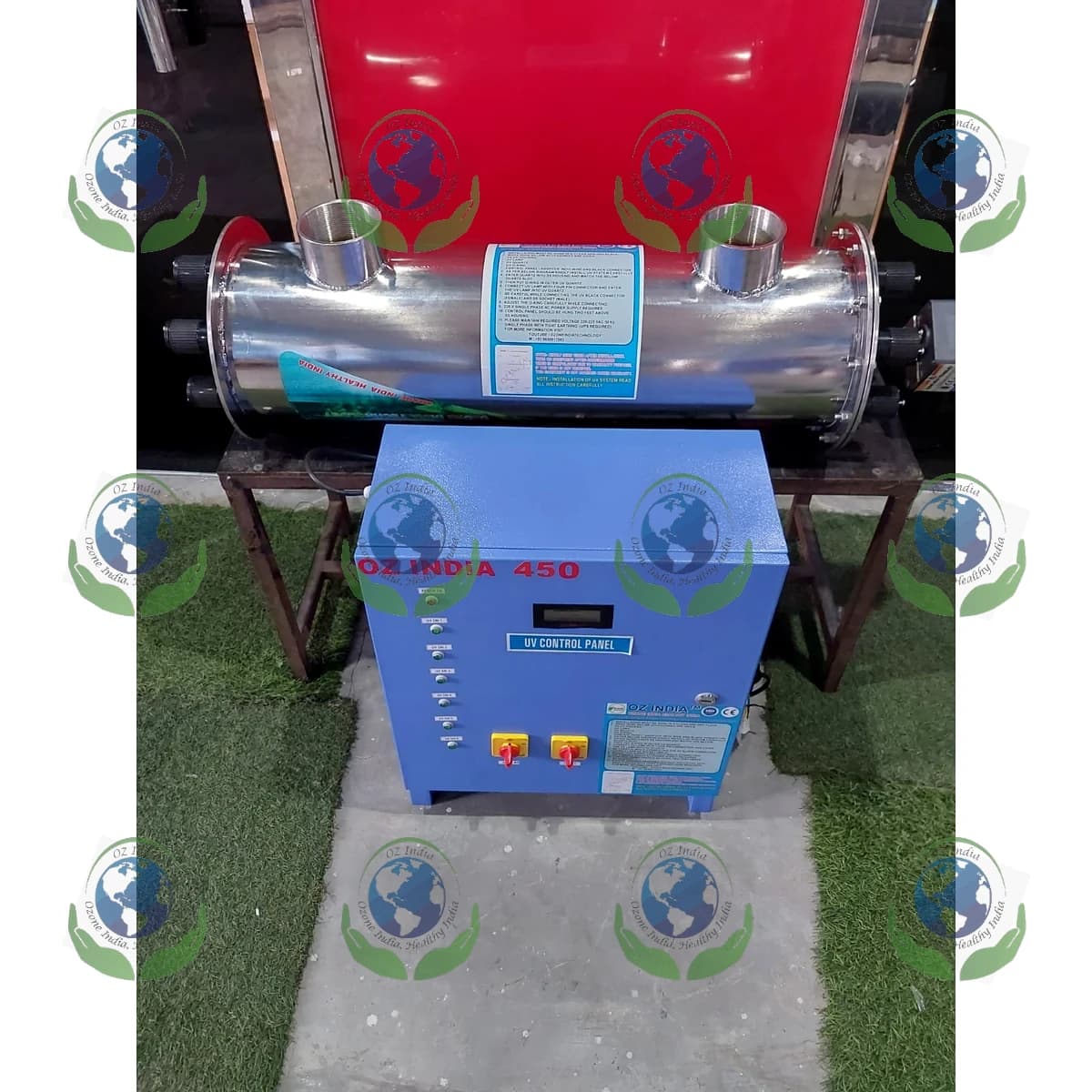
High-flow UV water treatment for pharmaceutical WFI, food & beverage process water, and industrial applications. Revised Schedule M 2025, HACCP, and FSSAI compliant. IQ/OQ/PQ documentation.
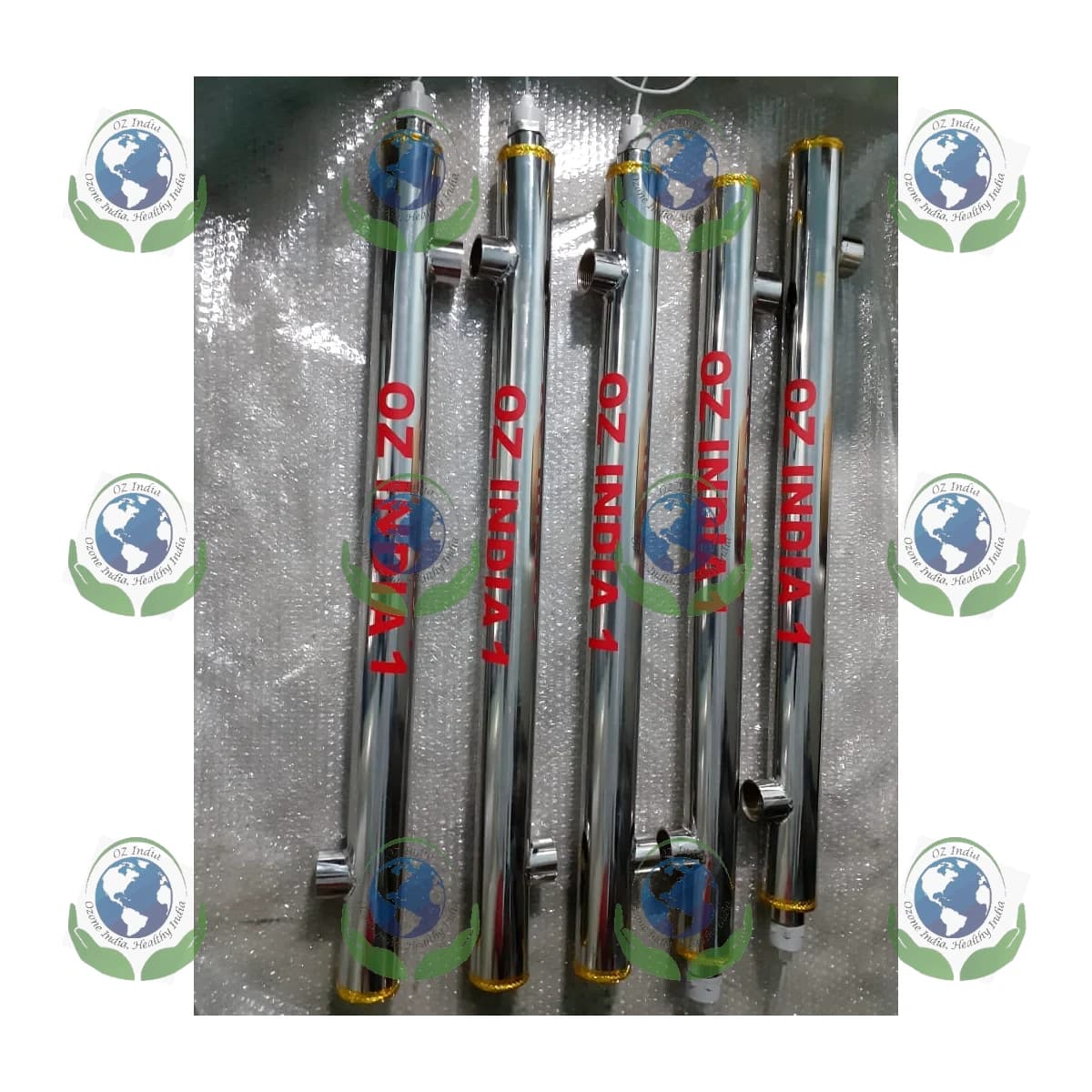
UV water disinfection for hotels, restaurants, offices, and educational institutions. HACCP and FSSAI compliant documentation. Trusted by Taj Hotels, McDonald's India, and IIT Kanpur.
IIT Patna Engineering
Alpha UV System IIT Patna engineers calculate UV dose from your actual water quality parameters — measured UVT, flow rate, target log reduction, and the specific compliance standard that governs your facility. Not from catalogue sizing tables or generic assumptions. Every system ships with a signed UV dose calculation report, a Philips certificate of authenticity, and compliance documentation prepared for the regulatory framework applicable to soft drinks uv operations.
From measured UVT, flow rate, and target log-reduction. Signed by IIT Patna engineer.
FSSAI Food Safety Standards · Codex Alimentarius CAC/RCP 1-1969 · IS 10500:2012 · BIS Certification for Packaged Water — documentation prepared to the audit checklist, not generic templates.
WhatsApp your flow rate, water quality, and compliance requirement — engineering-backed quote in 2 hours.
Mon–Sat · 9 AM–6 PM IST · IIT Patna alumni on call
Send us your flow rate and compliance requirement — quote with engineering rationale in 2 hours.
+91 93183 05878
Get Quote →
Call Direct
+91 95995 00580
Tap to Call →
Send Enquiry
Detailed specifications form
Open Form →
