Manufactured in Greater NoidaGenuine Philips UV-C LampsIIT Patna Alumni on Our TeamExporting to 20+ Countries
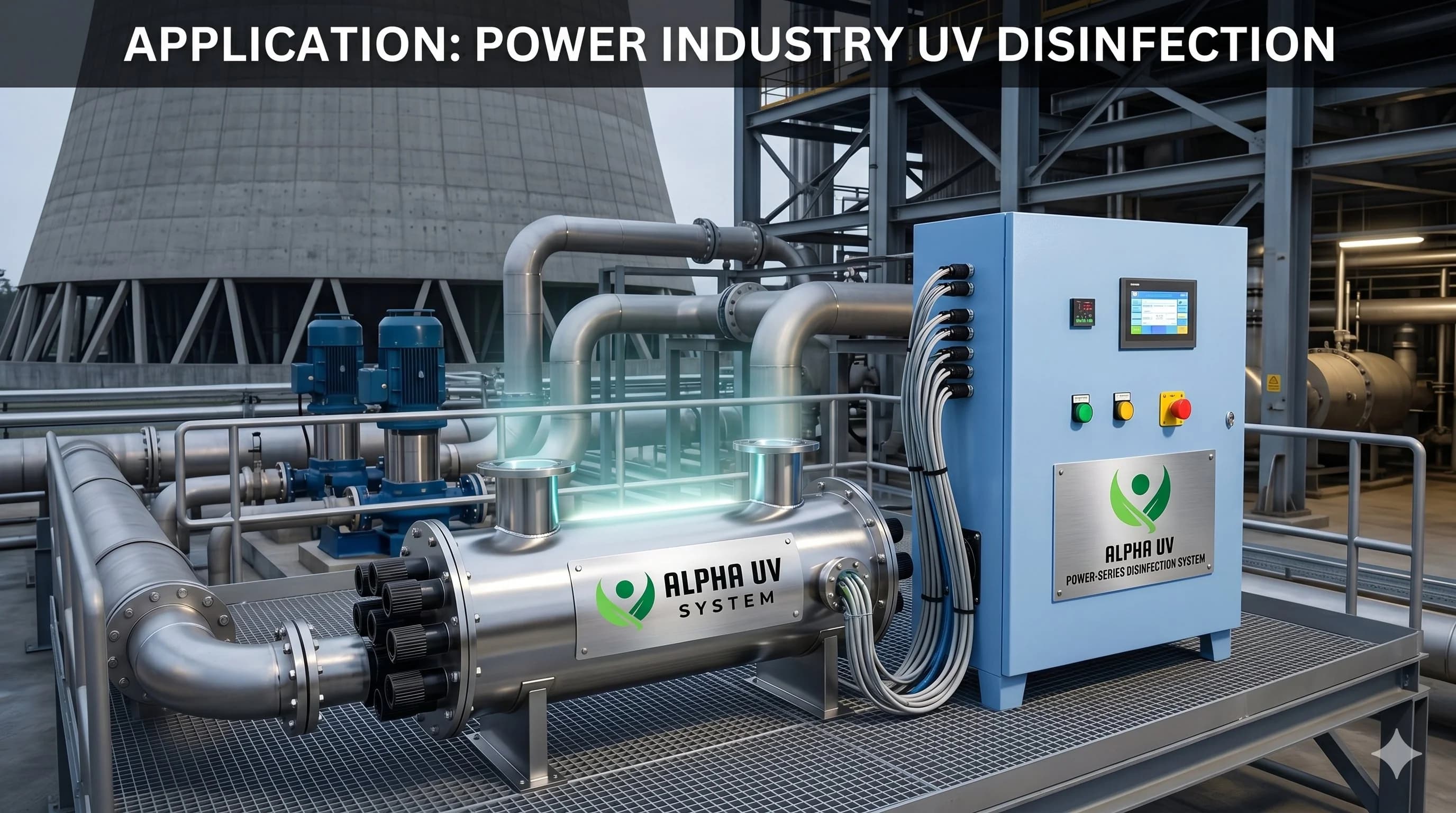
India's power generation sector — thermal, gas, nuclear, and pumped hydro — operates some of the world's largest water users in industrial applications. A single 500 MW thermal power plant can consume 15–25 million litres of water per day in cooling tower make-up, condenser cooling circuits, and auxiliary systems. Microbiological contamination of these water systems causes biofouling of condenser tubes (reducing heat exchange efficiency by 10–30%), Legionella public health risks from cooling tower drift, accelerated corrosion in steam generators, and microbial-induced corrosion (MIC) in buried and submerged pipework. CPCB Environmental Standards for Thermal Power Plants (ETP discharge) and Central Electricity Authority (CEA) technical standards for cooling water quality drive the regulatory framework. UV disinfection applied to cooling tower make-up water, DM plant feed water, and ETP discharge provides cost-effective microbial control that reduces biocide chemical costs, extends equipment life, and ensures regulatory compliance for India's growing fleet of power generation facilities.
UV Dose
40–60 mJ/cm²
Capacity
20,000–5,00,000 LPH
Cooling towers in thermal power plants are the single largest source of biofouling risk. The warm water (35–45°C return, 28–35°C supply), aeration through the tower fill, and dissolved nutrients from makeup water and process carry-over create ideal growth conditions for bacteria, algae, and Legionella. Biofilm formation on condenser tube surfaces — the primary consequence of uncontrolled bacterial growth in cooling circuits — creates an insulating layer that reduces heat transfer efficiency. A biofilm of just 0.1 mm thickness reduces heat exchanger efficiency by approximately 25%, directly affecting power plant output. For a 1,000 MW thermal station, a 10% reduction in condenser efficiency translates to approximately ₹2–5 crore in additional fuel cost per year.
Power plant cooling water biocide programs are among the largest consumers of industrial biocides in India. Chlorine gas, sodium hypochlorite, and halogen-release biocides are typically dosed at intake water treatment plants feeding cooling towers. These biocides are effective in bulk water but do not penetrate mature biofilm, creating a cycle of periodic shock dosing followed by rapid biological regrowth. UV disinfection of cooling tower makeup water — applied before the water enters the cooling tower basin — eliminates the incoming microbial load, significantly reducing the rate of biofilm formation and allowing biocide programs to shift from shock-dosing to maintenance dosing at lower chemical concentrations.
Cooling towers in industrial settings including power plants are among the highest-risk environments for Legionella pneumophila colonisation and amplification. The 2017 Legionella outbreak in Edinburgh (associated with an industrial cooling tower) and multiple outbreaks in Indian industrial zones highlight the public health dimension of cooling tower Legionella management. ASHRAE Standard 188-2021 (Legionellosis: Risk Management for Building Water Systems) is the global standard reference for cooling tower Legionella management, and it increasingly informs Indian power plant water risk management programs even in the absence of a specific Indian Legionella standard.
Power plant cooling towers present elevated Legionella risk compared to building cooling towers because of their scale (millions of litres of warm water), proximity to inhabited areas in some cases, and the challenge of managing large, complex water circuits. UV disinfection of cooling tower make-up water and a bleed-and-feed side-stream treatment approach reduces the Legionella count in the circulating water and controls the conditions that allow Legionella to amplify in the tower. Alpha UV System provides cooling-tower-specific UV systems with high-capacity stainless-steel chambers designed for the outdoor environment of a power plant water intake facility — IP66 rated, corrosion-resistant, and designed for low-maintenance operation with annual lamp change cycles.
Demineralised (DM) water plants at thermal power stations produce the ultra-pure water required for high-pressure boiler feed and steam turbine applications. DM water is produced by ion exchange or reverse osmosis (or a combination), typically achieving conductivity below 1 µS/cm. The biological quality of DM water is as important as its chemical quality: bacteria in DM water form biofilms on ion-exchange resin beds that reduce ion-exchange efficiency and require more frequent chemical regeneration cycles. Bacteria also colonise RO membranes in high-pressure RO systems, causing biofilm fouling that requires aggressive chemical cleaning (CEB — chemically enhanced backwash) at significant cost and downtime.
UV treatment of feed water to DM plants at the RO inlet protects RO membranes from biological fouling, extending membrane life from a typical 2–3 years to 5–7 years. UV treatment of DM water downstream of ion exchange polishing maintains the microbial quality of the ultra-pure water before it enters the boiler feed circuit. Sulfate-reducing bacteria (SRB), even at very low counts in DM water, can cause hydrogen sulphide production and under-deposit corrosion in boiler tubes — a mechanism responsible for several Indian power plant forced outages. UV treatment at 40 mJ/cm² eliminates SRB from DM water at counts far below the practical detection limit.
Thermal power plants generate multiple waste water streams that must be treated and monitored for CPCB compliance before discharge. Cooling tower blowdown contains elevated TDS, biocide residuals, and corrosion inhibitor chemicals. Ash pond overflow from fly ash and bottom ash storage areas contains suspended solids, alkaline pH, and trace metals. Boiler blowdown water is high-TDS, high-temperature water requiring cooling and treatment before discharge. Domestic sewage from plant accommodation must be treated to CPCB municipal sewage standards.
CPCB's Environmental Standards for Thermal Power Plants (issued under Environment Protection Act 1986, updated 2015 for new plants) specify limits for suspended solids, pH, total dissolved solids, and other parameters in cooling tower blowdown. For domestic and sanitary wastewater from power plant accommodation, standard CPCB sewage treatment standards apply, including total coliform limits of <100 MPN/100 mL for discharge to inland water bodies. UV disinfection as the final step in the plant's STP (sewage treatment plant) or combined ETP ensures coliform compliance in all discharge streams without chemical DBP formation in the effluent.
India's rapidly growing renewable energy sector — solar photovoltaic farms, wind farms, pumped hydro storage, and battery storage facilities — has different but important water treatment needs compared to thermal generation. Large utility-scale solar farms in Rajasthan, Gujarat, and Andhra Pradesh require water for panel washing to maintain generation efficiency. Solar panel soiling from dust, bird droppings, and biological growth reduces power generation by 10–30% in high-dust environments if panels are not washed at regular intervals.
Panel washing water quality is important: mineralised water leaves TDS deposits on glass panels when it evaporates, reducing light transmission and requiring mechanical cleaning to remove mineral films. Biologically contaminated water introduces algae and bacteria that form persistent biocolonies on panel glass surfaces. UV-treated RO permeate water — essentially pure water with zero minerals and zero biological content — is the optimal panel washing water for utility-scale solar farms. Alpha UV System supplies packaged RO + UV systems for solar farm water treatment, sized to the panel-washing demand based on farm area and washing frequency. For pumped hydro and hydroelectric storage facilities, UV disinfection of potable water for site accommodation and cooling water for generator equipment are standard applications.
Recommended Products
IIT Patna engineers recommend these systems for power plants applications based on flow rate, required UV dose, and compliance standard. Both systems use genuine Philips UV-C lamps and ship with complete compliance documentation.
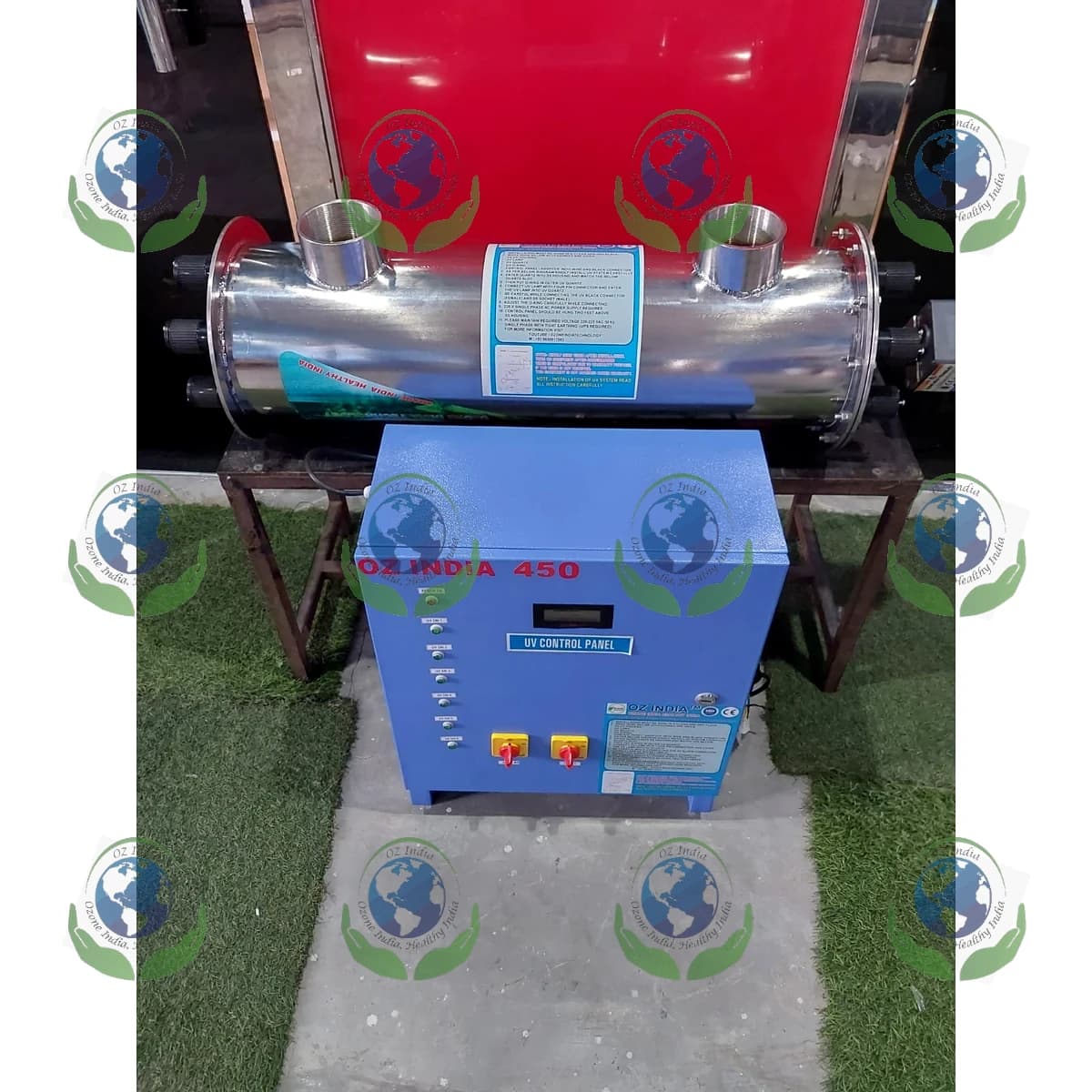
High-flow UV water treatment for pharmaceutical WFI, food & beverage process water, and industrial applications. Revised Schedule M 2025, HACCP, and FSSAI compliant. IQ/OQ/PQ documentation.
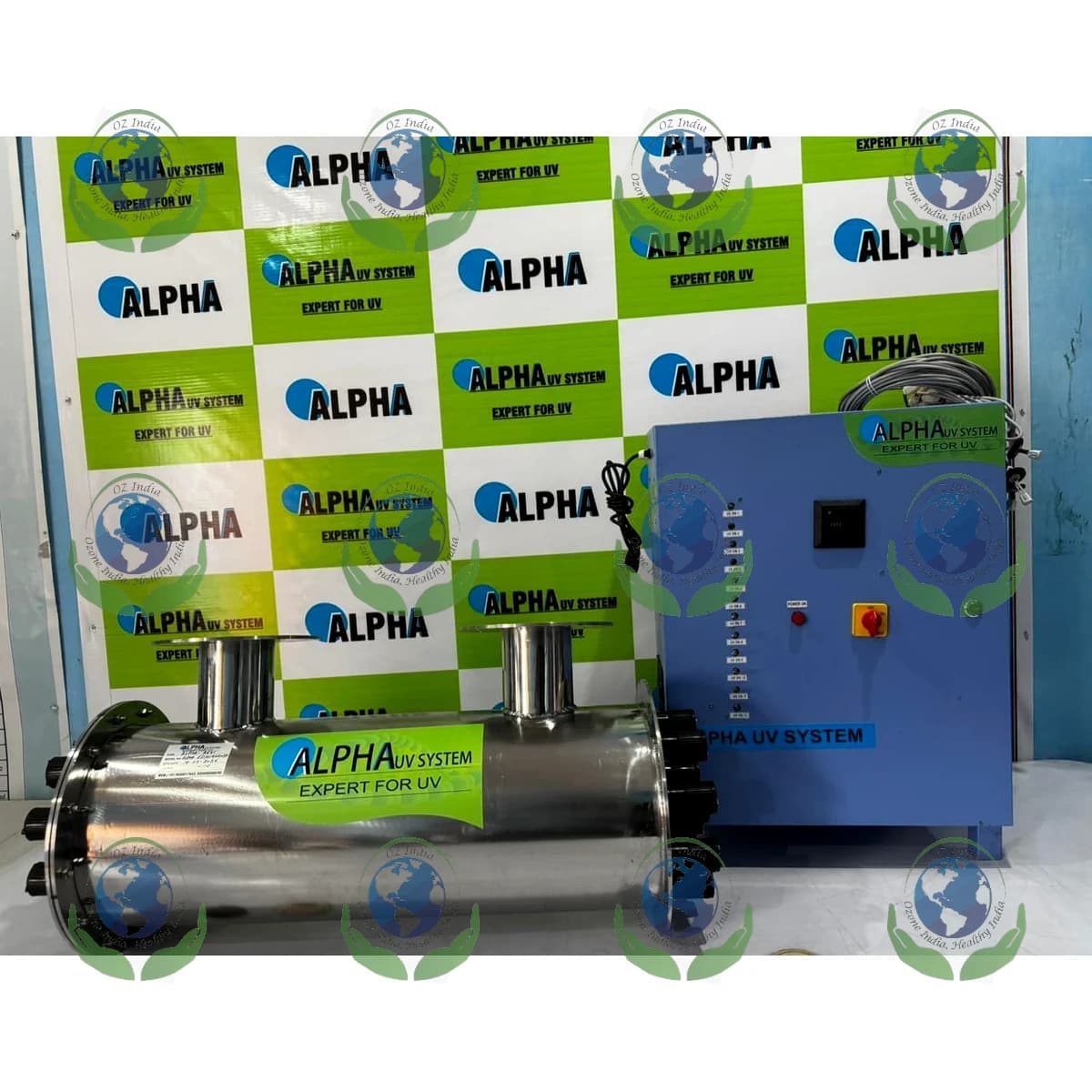
High-capacity UV disinfection for municipal water supply. BIS IS 10500:2012 and CPCB compliant. Open-channel and closed-vessel. PLC/SCADA control. MSME registered for government procurement.
IIT Patna Engineering
Alpha UV System IIT Patna engineers calculate UV dose from your actual water quality parameters — measured UVT, flow rate, target log reduction, and the specific compliance standard that governs your facility. Not from catalogue sizing tables or generic assumptions. Every system ships with a signed UV dose calculation report, a Philips certificate of authenticity, and compliance documentation prepared for the regulatory framework applicable to power plants operations.
From measured UVT, flow rate, and target log-reduction. Signed by IIT Patna engineer.
CEA (Central Electricity Authority) · CPCB · IS 10500 · ASME Boiler Codes · ASTM D2688 — documentation prepared to the audit checklist, not generic templates.
WhatsApp your flow rate, water quality, and compliance requirement — engineering-backed quote in 2 hours.
Mon–Sat · 9 AM–6 PM IST · IIT Patna alumni on call
Send us your flow rate and compliance requirement — quote with engineering rationale in 2 hours.
+91 93183 05878
Get Quote →
Call Direct
+91 95995 00580
Tap to Call →
Send Enquiry
Detailed specifications form
Open Form →
