Manufactured in Greater NoidaGenuine Philips UV-C LampsIIT Patna Alumni on Our TeamExporting to 20+ Countries
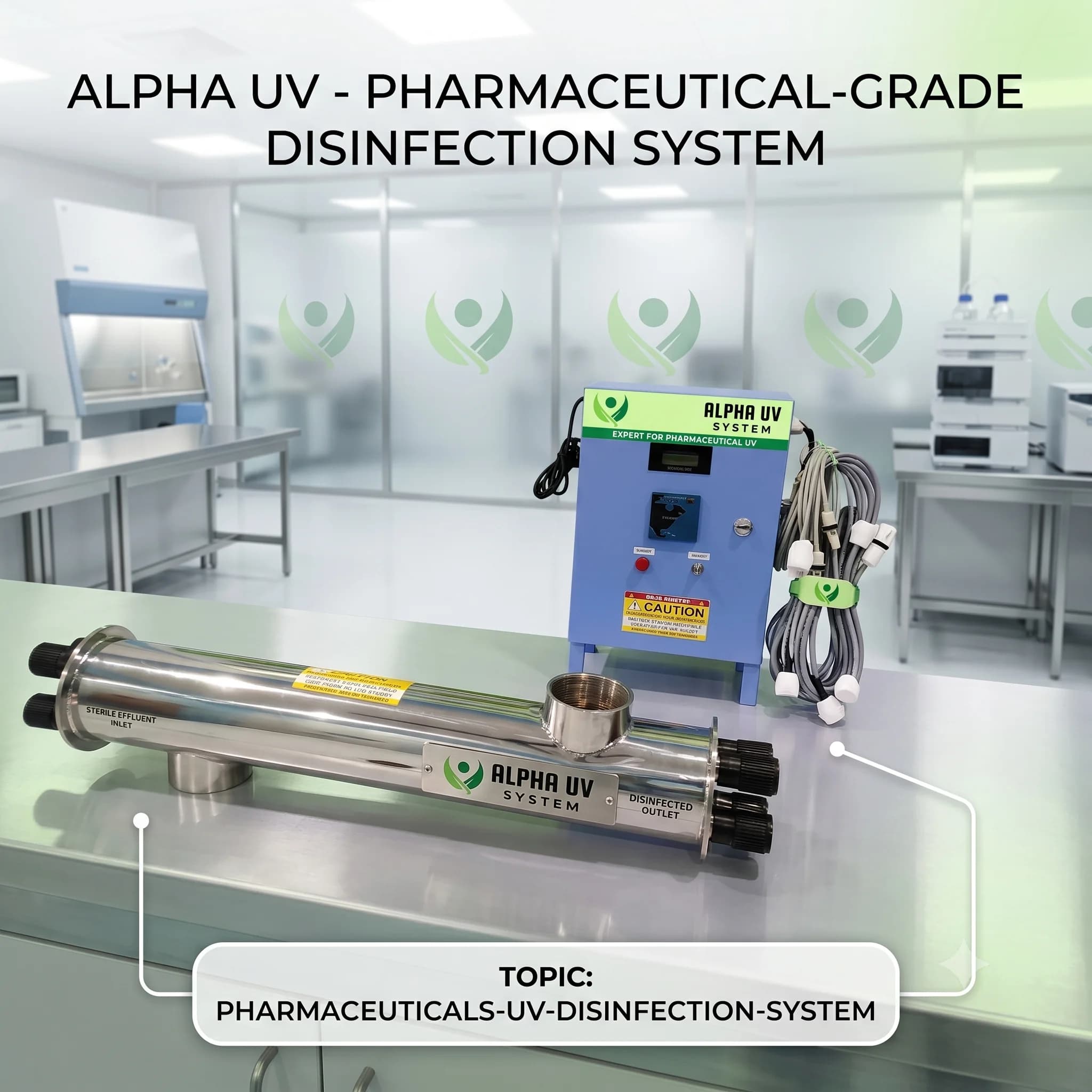
Chemical-free UV-C bioburden control for pharmaceutical purified water and WFI loops — USP 1231, EP, IP, Schedule M 2025 and WHO GMP compliant. SS316L electropolished chambers, Philips UV-C lamps, IQ/OQ documentation.
UV Dose
40–80 mJ/cm²
Capacity
500 – 50,000 LPH
Pharmaceutical water is the most regulated water application in the world. Purified Water (PW) and Water for Injection (WFI) are official articles of the United States Pharmacopeia (USP Chapter 1231), European Pharmacopoeia (EP Chapter 5.1.3), and Indian Pharmacopoeia (IP) — each specifying strict limits on conductivity, TOC, bioburden, and endotoxin. Any disinfection technology used here must comply without introducing contaminants of its own.
UV disinfection at 254 nm is uniquely suited to pharmaceutical water: it inactivates bacteria, viruses, and fungi without adding any dissolved species to the water — no chlorine, no ozone, no formaldehyde — and therefore has zero impact on water conductivity or TOC. For a USP Purified Water system where conductivity must be below 4.3 µS/cm (at 25°C) and TOC below 500 ppb, this zero-addition property is decisive. Chemical sanitization methods risk trace chemical carryover that affects both water quality parameters and downstream patient safety.
The WHO Technical Report Series No. 970, Annex 2 (2012) — WHO Good Manufacturing Practices for Pharmaceutical Products — explicitly describes UV as an acceptable bioburden control method for PW and WFI distribution systems. India's revised Schedule M (amended 2023, effective 2025) under the Drugs and Cosmetics Act aligns Indian GMP fully with WHO GMP, making UV disinfection documentation a standard element of CGMP facility audits conducted by CDSCO.
A pharmaceutical water system's treatment train removes successively: particulates (filtration), chlorine and organics (activated carbon), dissolved ions (RO + EDI), trace organics (UV at 185 nm), and microorganisms (UV at 254 nm, 0.2 µm final filter).
UV serves two distinct functions depending on wavelength used:
Single 254 nm UV — bioburden control: The primary pharmaceutical application. UV at 254 nm is absorbed by microbial DNA, inactivating bacteria, yeasts, moulds, and viruses without any chemical addition. Installed on the return leg of the PW or WFI distribution loop so all water re-entering the storage tank passes through UV treatment — preventing microbial regrowth in the loop between use points. This is the configuration described in WHO GMP Annex 2 and the ISPE Baseline Pharmaceutical Engineering Guide, Volume 4 — Water and Steam Systems (2011).
Dual 185 + 254 nm UV — TOC reduction and bioburden: 185 nm photons generate hydroxyl radicals (HO•) that oxidise dissolved organic compounds to CO₂ and water. Used in pharmaceutical ultrapure water (UPW) systems where RO/EDI water already achieves conductivity below 1.1 µS/cm but still carries 50–200 ppb TOC from trace organics. The 185 nm reaction reduces TOC to below 10 ppb — far within the USP 500 ppb limit. Oppenlander's Photochemical Purification of Water and Air (Wiley-VCH, 2003) is the standard technical reference for this application in pharmaceutical settings.
The four pharmacopoeias governing Indian pharmaceutical manufacturers specify the following water quality limits:
USP Purified Water (Chapter 1231): Conductivity < 4.3 µS/cm at 25°C, TOC < 500 ppb, Bioburden < 100 CFU/100 mL (action limit), E. coli absent in 100 mL.
USP Water for Injection: All PW parameters plus Bioburden < 10 CFU/100 mL, Endotoxin < 0.25 EU/mL.
European Pharmacopoeia 10.0 (Chapter 5.1.3): PW < 100 CFU/100 mL; Highly Purified Water < 10 CFU/100 mL; WFI < 10 CFU/100 mL.
Indian Pharmacopoeia 2022: PW < 100 CFU/100 mL; WFI not more than 10 CFU/100 mL, Endotoxin < 0.25 EU/mL.
UV disinfection at 40–80 mJ/cm² delivers 4+ log inactivation of E. coli, Pseudomonas aeruginosa, Staphylococcus aureus, and Burkholderia cepacia — the organisms most commonly encountered in pharmaceutical water systems and those most frequently cited in WHO GMP Annex 2 as contamination concerns. Post-UV water routinely tests below 1 CFU/100 mL in clean systems, providing a 100-fold safety margin against the USP/IP action limit.
For pharmaceutical UPW loops where TOC control is required alongside bioburden, dual-wavelength UV systems use 185 nm lamps to generate the photochemical reaction:
H₂O + hν (185 nm) → HO• + H•
The hydroxyl radical (HO•) is the most powerful aqueous oxidant (E° = +2.80 V), mineralising virtually all organic compounds to CO₂ and water within milliseconds. Rosenfeldt and Linden (2004) in Environmental Science & Technology demonstrated complete mineralisation of pharmaceutical trace organics including antibiotics, hormones, and endocrine disruptors using 185+254 nm UV at typical pharmaceutical UPW flow conditions.
Alpha UV System supplies dual-wavelength pharmaceutical UV units (185 + 254 nm) with:
The chamber material for pharmaceutical UV is a regulatory requirement. SS316L (UNS S31603) — low-carbon austenitic stainless steel with molybdenum addition — is the ASME BPE-specified material for all pharmaceutical process surfaces in contact with purified water or WFI. The low carbon content (< 0.03%) prevents sensitisation at welds — the chromium carbide precipitation that creates corrosion-prone zones that are difficult to clean and sanitise.
Internal electropolishing to Ra ≤ 0.5 µm is the ASME BPE surface finish standard for pharmaceutical contact surfaces. Electropolishing removes the work-hardened surface layer from SS316L, producing a chromium-enriched passive oxide layer that resists corrosion and — critically — does not support biofilm adhesion. FDA and EU GMP inspectors consistently look for Ra ≤ 0.5 µm documentation during pharmaceutical facility inspections.
Alpha UV System fabricates all pharmaceutical UV chambers with:
Pharmaceutical purified water systems in India have historically relied on hot water circulation (70–85°C), formaldehyde sanitization (0.5–2% solution), or hydrogen peroxide / ozone cycles. Each method requires system shutdown, extensive rinsing to restore water quality to specification, and revalidation after each cycle.
UV disinfection is continuous — operating 24/7 without cycle downtime. For a 2,000 LPH PW system:
UV reduces the frequency of required thermal or chemical sanitization cycles — from weekly or monthly to quarterly or annual — by maintaining bioburden below action limits continuously. This reduces total pharmaceutical water system operating cost by 40–60% over a five-year period while also improving the water system uptime available for production.
Under Schedule M 2025 and WHO GMP, pharmaceutical water UV systems require the full DQ/IQ/OQ/PQ qualification lifecycle:
Design Qualification (DQ): UV system specification vs User Requirement Specification; material certificates; IIT Patna UV dose calculation report; compliance declaration against USP 1231 / Schedule M 2025.
Installation Qualification (IQ): As-installed P&ID verification; SS316L material certificates; electropolishing certificate; UV intensity sensor calibration records; Philips lamp serial number documentation; pressure test results.
Operational Qualification (OQ): UV intensity measurements at minimum, nominal, and maximum flow rates; alarm setpoint verification; dose confirmation at worst-case conditions (maximum flow, end-of-life lamp simulation); interlock function test.
Performance Qualification (PQ): Ongoing water quality monitoring data demonstrating consistent compliance with alert and action limits per the facility's Water Quality Plan.
Alpha UV System provides pre-written IQ/OQ protocol templates for each pharmaceutical UV system supplied, reducing the QA team's validation workload. NABL-accredited pre- and post-installation water quality testing is available as part of the supply scope.
Contact Alpha UV System for pharmaceutical UV system specifications, IQ/OQ documentation templates, and Schedule M 2025 compliance declarations — delivered within 24–48 hours for Indian pharmaceutical manufacturing facilities.
Recommended Products
IIT Patna engineers recommend these systems for pharma uv applications based on flow rate, required UV dose, and compliance standard. Both systems use genuine Philips UV-C lamps and ship with complete compliance documentation.
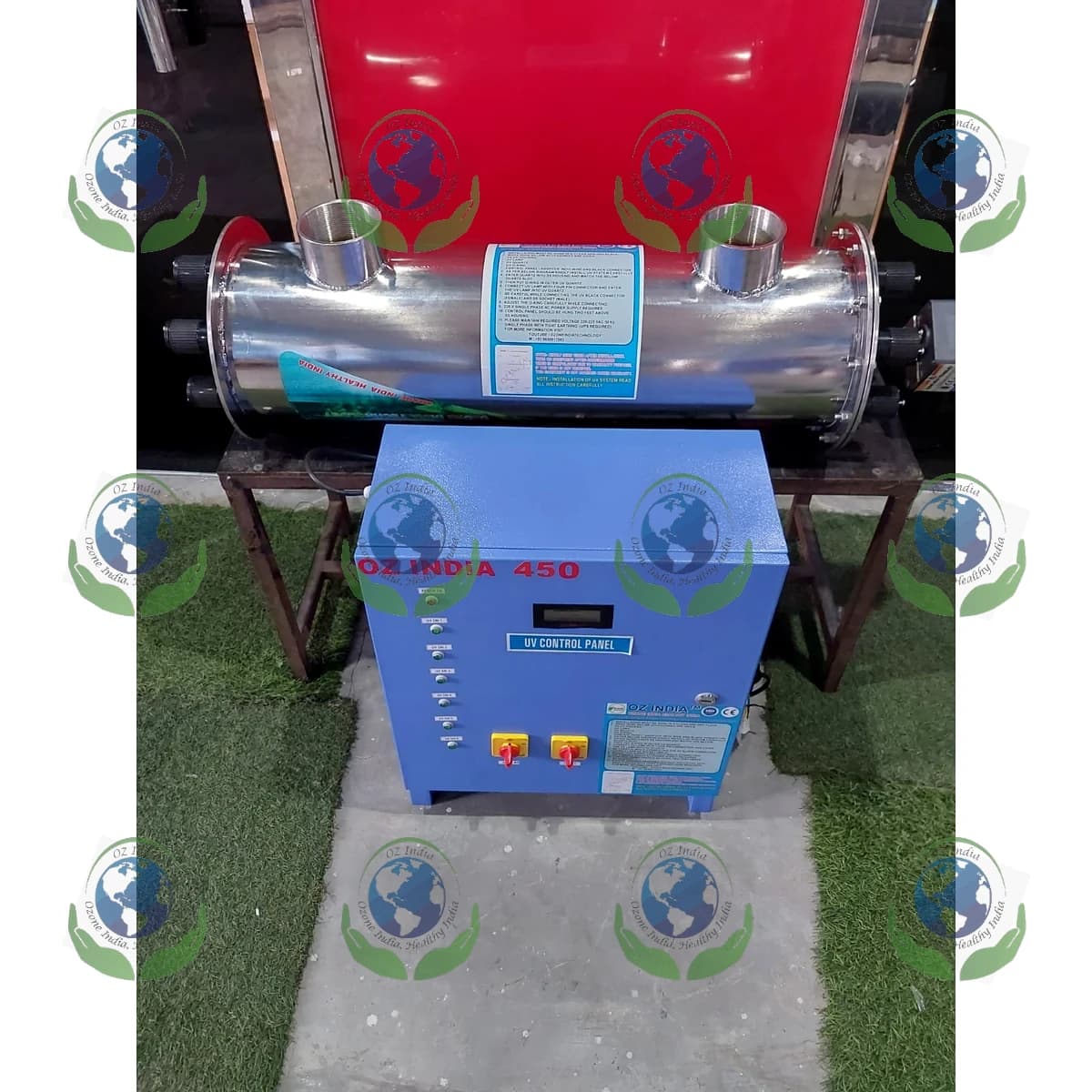
High-flow UV water treatment for pharmaceutical WFI, food & beverage process water, and industrial applications. Revised Schedule M 2025, HACCP, and FSSAI compliant. IQ/OQ/PQ documentation.
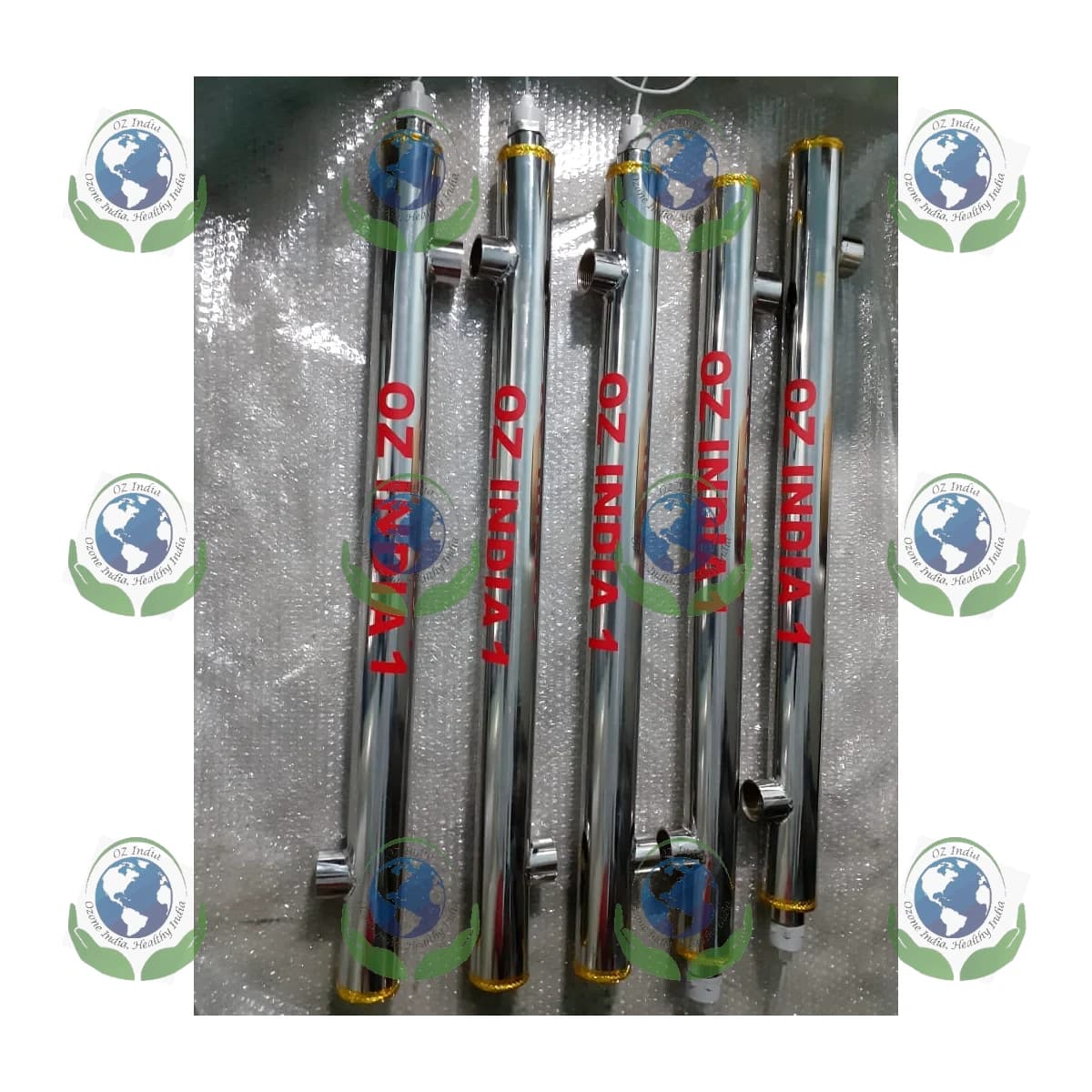
UV water disinfection for hotels, restaurants, offices, and educational institutions. HACCP and FSSAI compliant documentation. Trusted by Taj Hotels, McDonald's India, and IIT Kanpur.
IIT Patna Engineering
Alpha UV System IIT Patna engineers calculate UV dose from your actual water quality parameters — measured UVT, flow rate, target log reduction, and the specific compliance standard that governs your facility. Not from catalogue sizing tables or generic assumptions. Every system ships with a signed UV dose calculation report, a Philips certificate of authenticity, and compliance documentation prepared for the regulatory framework applicable to pharma uv operations.
From measured UVT, flow rate, and target log-reduction. Signed by IIT Patna engineer.
USP Chapter 1231 · EP / IP / Schedule M 2025 · WHO GMP / CGMP · SS316L Electropolished — documentation prepared to the audit checklist, not generic templates.
WhatsApp your flow rate, water quality, and compliance requirement — engineering-backed quote in 2 hours.
Mon–Sat · 9 AM–6 PM IST · IIT Patna alumni on call
Send us your flow rate and compliance requirement — quote with engineering rationale in 2 hours.
+91 93183 05878
Get Quote →
Call Direct
+91 95995 00580
Tap to Call →
Send Enquiry
Detailed specifications form
Open Form →
