Manufactured in Greater NoidaGenuine Philips UV-C LampsIIT Patna Alumni on Our TeamExporting to 20+ Countries
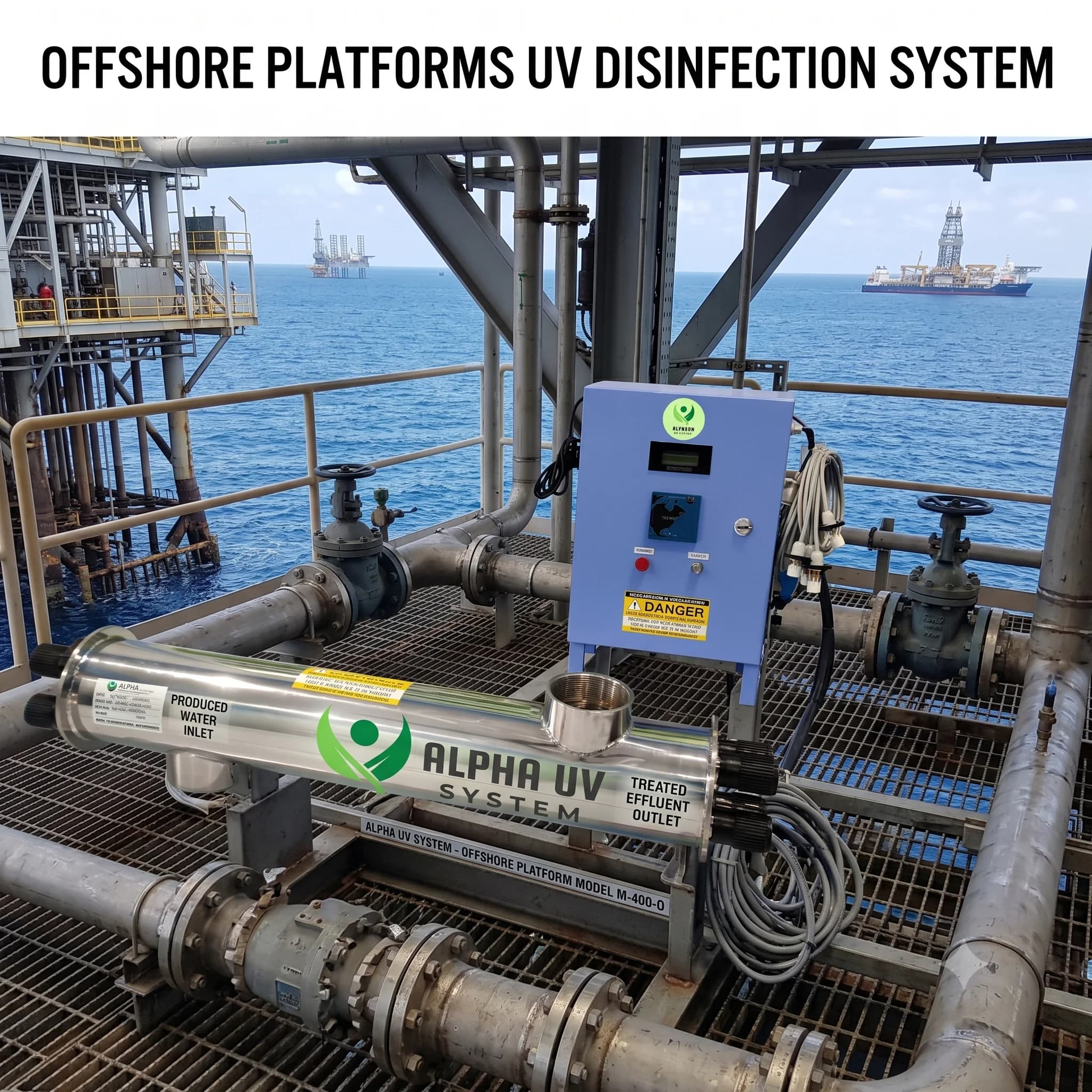
Offshore oil and gas platforms present some of the most demanding water treatment environments in the world. Isolated in the Arabian Sea, Bay of Bengal, or open ocean, these installations must supply safe drinking water to crews of 80 to 600 persons, treat sewage to international discharge standards, and manage produced water from hydrocarbon operations — all without the chemical logistics infrastructure available onshore. UV disinfection is the preferred technology for offshore potable water because it requires no chemical storage, generates no hazardous disinfection by-products, and operates reliably in the corrosive, high-humidity, and vibration-prone environment of an offshore structure. Alpha UV System designs offshore UV units in SS316L and super-duplex stainless steel with IP66-rated enclosures, vibration-dampened lamp brackets, ATEX/IECEx explosion-proof electrical options for hazardous area installation, and MARPOL/IOGP compliance documentation for regulatory submissions. Capacities range from 1,000 LPH for small manned platforms to 50,000 LPH for large FPSO vessels and hub production platforms.
UV Dose
40–100 mJ/cm²
Capacity
1,000 – 50,000 LPH
Offshore oil and gas platforms face a fundamental water security problem: they operate in marine environments where every litre of potable water must either be produced from seawater or transported by supply vessel — both methods that introduce contamination risks that cannot be managed by the standard municipal infrastructure available onshore. Reverse osmosis desalination, the primary seawater treatment technology on modern offshore platforms, produces permeate water of excellent chemical quality. RO membranes reject over 99% of dissolved salts, bacteria, and viruses — but they are not absolute barriers against very small viruses, and the post-RO storage and distribution system is vulnerable to bacterial re-contamination if not continuously disinfected.
Post-RO storage tanks and distribution pipework on platforms are particularly prone to Legionella pneumophila colonisation. The warm tropical and subtropical ambient temperatures that characterise Indian offshore operations in the Arabian Sea and Bay of Bengal — typically 28–35°C ambient — fall within the Legionella growth temperature range (25–50°C). Water in distribution deadlegs, low-use outlets, and calorifier zones at sub-pasteurisation temperatures provides ideal Legionella amplification conditions. The IOGP Report 456 (Offshore Water Management) identifies Legionella as the primary pathogen risk in offshore platform potable water systems and recommends UV disinfection as the primary engineering control.
Barge-transported fresh water — a common supply method for smaller offshore installations and during periods when the platform's desalination plant is under maintenance — arrives with unpredictable microbiological quality. Water transported in unpressurised barges through tropical coastal waters can have bacterial counts of 10³–10⁵ CFU/mL — orders of magnitude above WHO drinking water guideline values. UV disinfection at 60 mJ/cm² on the barge unloading line and again at the distribution outlet ensures that barge water is treated to potable standards before crew consumption, regardless of its condition on arrival.
The cost of operating chemical disinfection systems on an offshore platform is not simply the cost of the chemical. Hypochlorite, biocides, and other water treatment chemicals are classified as HAZMAT cargo under IMDG (International Maritime Dangerous Goods) regulations and require dedicated storage, handling, and emergency response procedures. Supply boat logistics for chemical delivery to remote deep-water platforms in the Arabian Sea or Bay of Bengal can add ₹8–15 lakh per year to the effective cost of chemical treatment. HAZMAT storage on a platform with limited deck space and adjacent to hydrocarbon processing equipment creates additional safety risks that UV disinfection entirely eliminates.
The 5-year total cost of ownership comparison for a 100-person platform consistently shows UV systems reaching payback within 18–24 months of installation, after which the annual savings in chemical logistics represent pure cost reduction. For Indian offshore operators — ONGC, Oil India, and private production partners — managing multiple platforms simultaneously, the aggregate saving from transitioning from chemical to UV disinfection across a fleet of manned platforms represents a material operating cost reduction. Alpha UV System works with platform operators to develop fleet-level UV transition plans with phased implementation timelines.
Offshore platform water sources span a wide range of UV transmittance values, from the near-pure RO permeate at 95% UVT to turbid coastal water at 50% UVT. The UV dose delivered to organisms in the water depends on the product of lamp irradiance and exposure time in the UV chamber, both of which are affected by the water's UVT. Higher UVT means more UV photons reach organisms at a given flow rate; lower UVT means photons are absorbed by dissolved organic matter before reaching organisms, requiring slower flow to maintain the dose.
Alpha UV System offshore UV units are designed with an in-line UVT sensor and automatic flow rate regulation that maintains the design UV dose across the full range of expected water quality conditions at each platform location. The system design is based on the worst-case seasonal UVT measured at that specific platform — platforms in the Bay of Bengal near river delta outflows have different water quality profiles than deep-water platforms in the central Arabian Sea, and system sizing reflects these site-specific conditions. This approach ensures that the UV dose delivered to the organisms in the water is always at or above the validated minimum, regardless of seasonal water quality variation.
Standard industrial UV systems are not suitable for offshore deployment. The salt-laden marine atmosphere accelerates corrosion of non-passivated stainless steel within months of installation. Vibration from platform dynamics, helicopter landings on adjacent helidecks, and machinery transmission requires vibration-isolated lamp assemblies and flexible conduit electrical connections to prevent lamp breakage during normal operational loading. Humidity levels in tropical offshore environments routinely exceed 90% RH, requiring IP66-minimum enclosure ratings for all electrical components. Platform QHSE regulations require that any electrical equipment installed within defined hazardous area boundaries carries ATEX Zone 1 or Zone 2 certification as appropriate to the area classification.
Alpha UV System's offshore UV units are constructed from super-duplex 2507 stainless steel for the UV chamber wetted parts, providing maximum chloride pitting resistance in seawater-exposed environments. Control panels are rated IP66 minimum with stainless-steel enclosures sealed against salt spray ingress. Lamp assemblies use ceramic lampholder bases to withstand the elevated temperatures near process equipment areas. Vibration-dampened lamp brackets prevent lamp breakage from structural vibration. Each unit ships with a marine-grade documentation package: ATEX certificate (if required), IMO MARPOL compliance documentation, material traceability certificates, and a pressure test certificate — all acceptable to offshore QHSE auditors and classification society surveyors.
Offshore platform crews are a captive population under occupational health regulations — they cannot choose an alternative water source if the onboard potable water is unsafe. WHO Guidelines for Drinking-water Quality (4th edition, 2011) are the primary reference standard for potable water on offshore installations globally, and IOGP Report 456 provides the sector-specific operational guidance. Both documents recommend continuous UV disinfection as the final barrier in the potable water treatment train, with UV intensity monitoring and automatic flow control as the essential performance assurance mechanisms.
A compliant offshore potable water UV system from Alpha UV System is configured with duty/standby UV chambers with automatic changeover. If the duty UV unit fails or its UV intensity drops below 70% of the validated set-point, the standby unit activates automatically without operator intervention, and an alarm is generated at the platform's DCS/SCADA system. For critical high-crew-density platforms, parallel redundant configurations with two UV chambers operating simultaneously at 50% flow rate provide the highest level of reliability. The UVC intensity monitor output is hard-wired to a downstream potable water supply valve that closes automatically if intensity drops below the validated minimum, preventing un-disinfected water from reaching crew accommodation at any time.
The economic advantage of UV disinfection over chemical alternatives on offshore platforms is driven primarily by the elimination of chemical logistics costs rather than by the chemical cost itself.
For a 100-person offshore platform consuming 15–20 m³/day of potable water, an Alpha UV System offshore UV unit with ATEX-rated control panel has a capital cost of ₹40–50 lakh installed, including stainless-steel skid mounting, pipework connections, ATEX documentation, and commissioning. Annual operating costs are ₹1.5–2.5 lakh (lamp and sleeve replacement, electricity, remote technical support subscription). The equivalent chlorination system has a lower capital cost of ₹15–25 lakh but incurs annual chemical logistics costs of ₹20–30 lakh — reaching the UV system's 5-year cumulative cost within 18 months of installation. Over a 5-year period, the UV system saves ₹1.1–1.4 crore per platform compared to chemical treatment.
IIT Patna-trained engineers from Alpha UV System's technical team provide detailed site-specific TCO analysis for each platform enquiry. Contact Alpha UV System at WhatsApp 9318305878 for an offshore UV system proposal with full technical documentation within 24–48 hours.
Recommended Products
IIT Patna engineers recommend these systems for offshore uv applications based on flow rate, required UV dose, and compliance standard. Both systems use genuine Philips UV-C lamps and ship with complete compliance documentation.
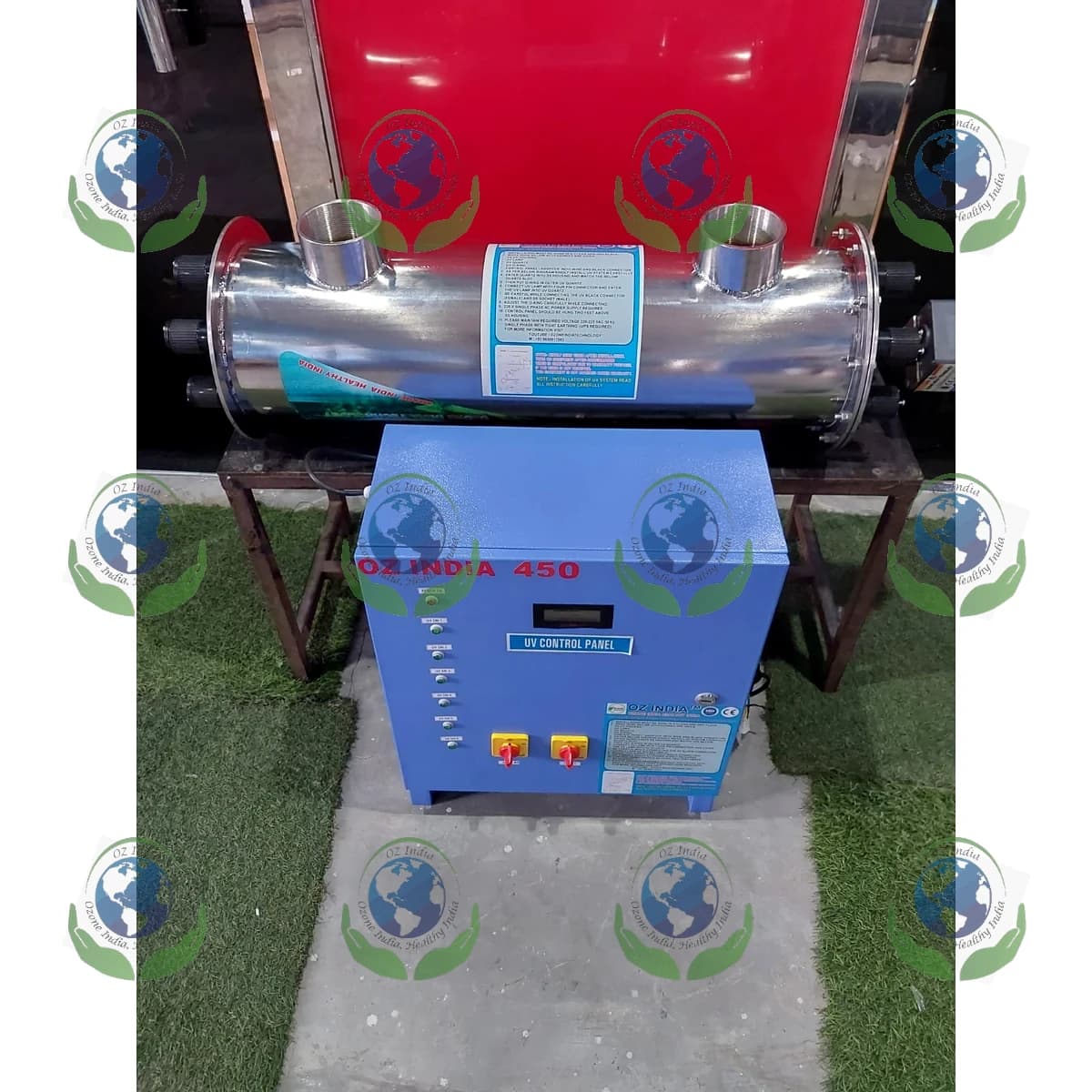
High-flow UV water treatment for pharmaceutical WFI, food & beverage process water, and industrial applications. Revised Schedule M 2025, HACCP, and FSSAI compliant. IQ/OQ/PQ documentation.
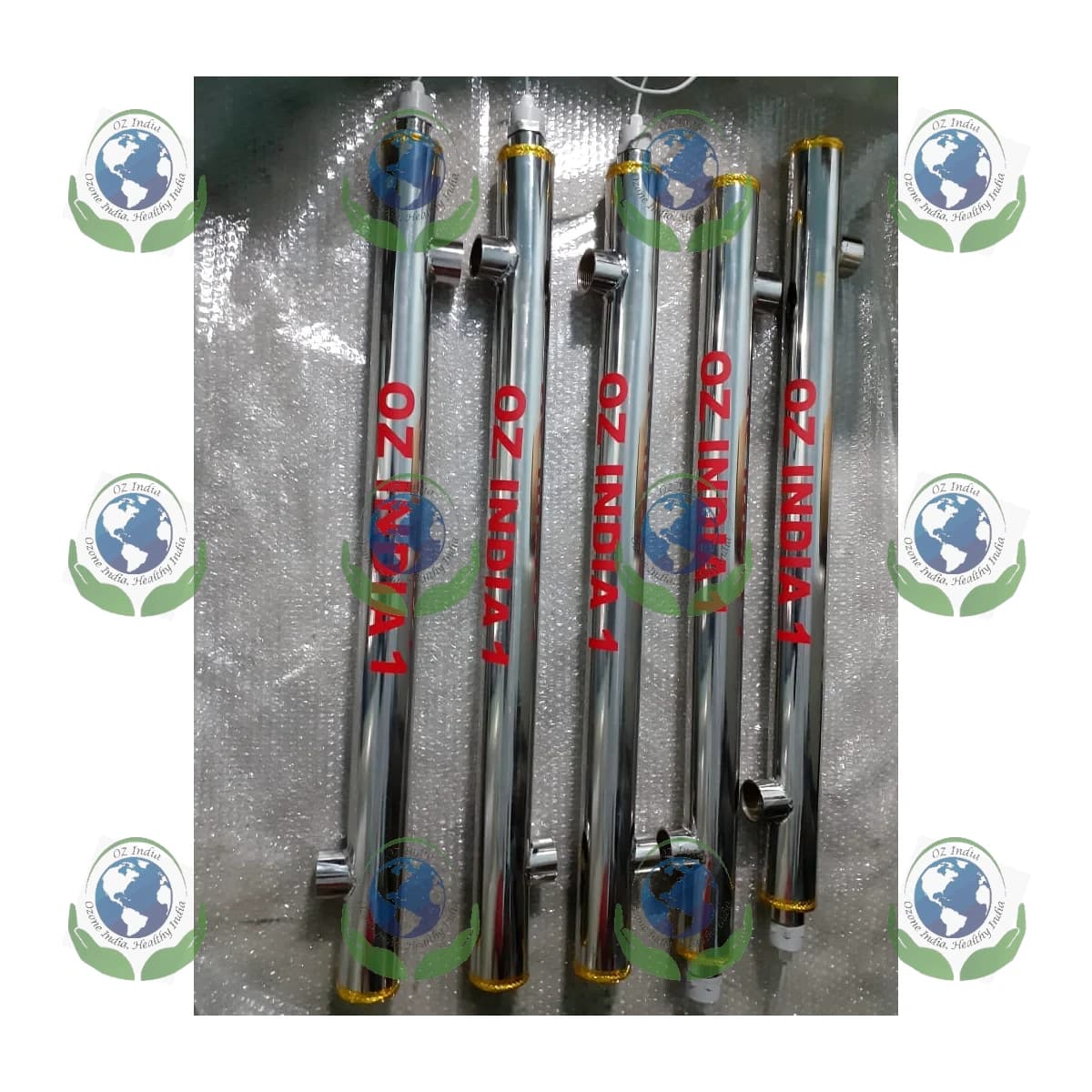
UV water disinfection for hotels, restaurants, offices, and educational institutions. HACCP and FSSAI compliant documentation. Trusted by Taj Hotels, McDonald's India, and IIT Kanpur.
IIT Patna Engineering
Alpha UV System IIT Patna engineers calculate UV dose from your actual water quality parameters — measured UVT, flow rate, target log reduction, and the specific compliance standard that governs your facility. Not from catalogue sizing tables or generic assumptions. Every system ships with a signed UV dose calculation report, a Philips certificate of authenticity, and compliance documentation prepared for the regulatory framework applicable to offshore uv operations.
From measured UVT, flow rate, and target log-reduction. Signed by IIT Patna engineer.
MARPOL Annex IV · IOGP Report 456 · WHO Offshore Potable Water · CPCB — documentation prepared to the audit checklist, not generic templates.
WhatsApp your flow rate, water quality, and compliance requirement — engineering-backed quote in 2 hours.
Mon–Sat · 9 AM–6 PM IST · IIT Patna alumni on call
Send us your flow rate and compliance requirement — quote with engineering rationale in 2 hours.
+91 93183 05878
Get Quote →
Call Direct
+91 95995 00580
Tap to Call →
Send Enquiry
Detailed specifications form
Open Form →
