Manufactured in Greater NoidaGenuine Philips UV-C LampsIIT Patna Alumni on Our TeamExporting to 20+ Countries
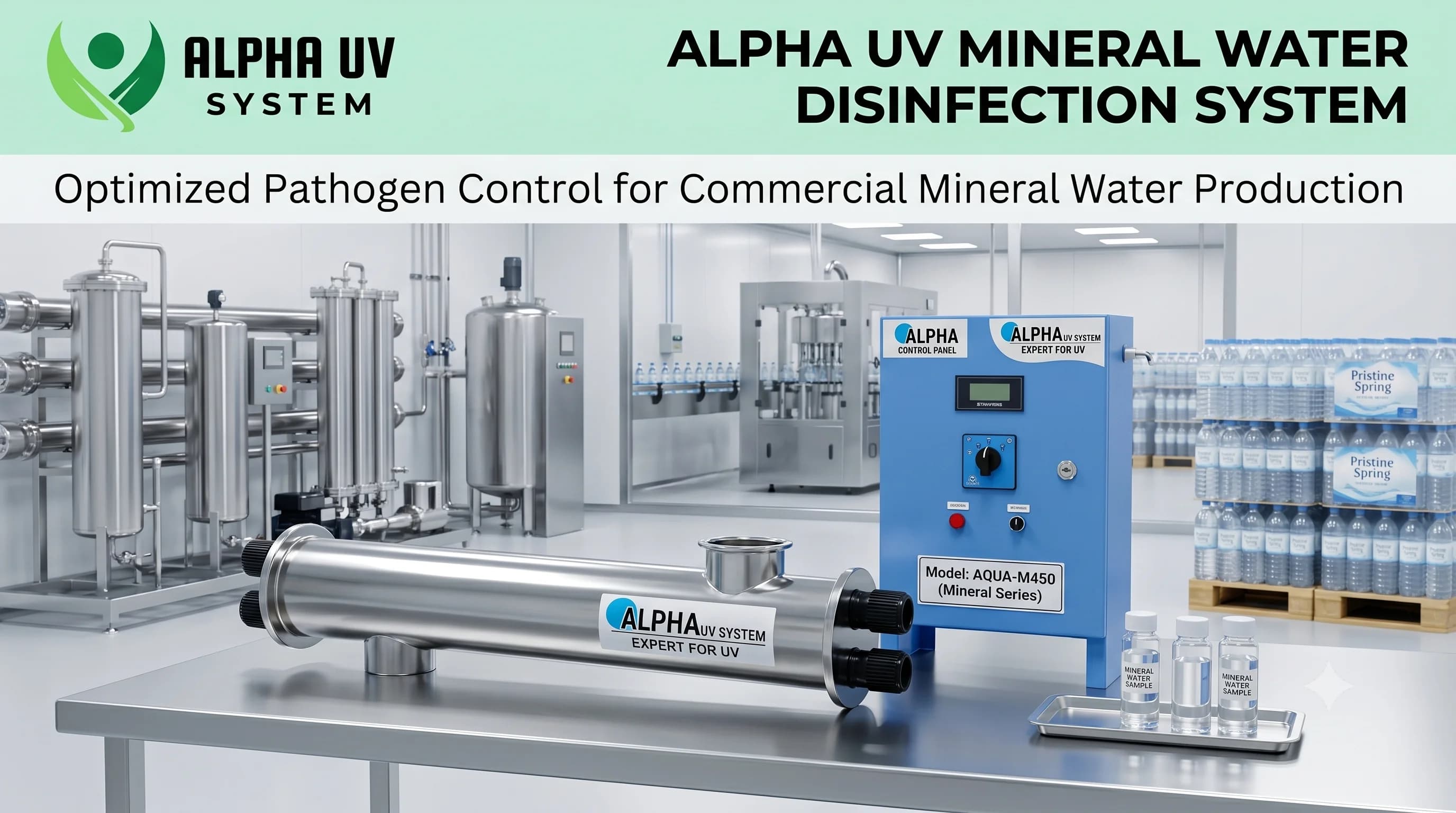
Packaged mineral water and natural mineral water production in India requires microbiological treatment that eliminates pathogens without adding chemicals that alter the mineral profile, taste, or FSSAI-regulated composition of the product. BIS IS 13428 (Packaged Natural Mineral Water) and FSSAI Packaged Water Regulations 2011 define the microbiological standards for packaged water — and specify that treatment must not introduce chemical additives that change the essential mineral composition of the water. UV disinfection at 40 mJ/cm² delivers 4-log inactivation of E. coli, Salmonella, Cryptosporidium, and all waterborne pathogens without any chemical addition, without altering mineral content, and with zero impact on water taste or odour. Alpha UV System: Philips UV-C, food-grade SS316L, IIT Patna-trained engineers, BIS IS 13428 and FSSAI documentation included.
UV Dose
40 mJ/cm²
Capacity
500 – 20,000 LPH
India's packaged drinking water and natural mineral water market is one of the fastest-growing food segments, with an estimated Rs 25,000–30,000 crore annual market value. The sector is governed by two parallel regulatory frameworks: BIS IS 13428:2017 (Packaged Natural Mineral Water — Specification, 4th Revision) for natural mineral water products, and FSSAI Food Safety and Standards (Food Products Standards and Food Additives) Regulations 2011, Schedule II for packaged drinking water. BIS certification under IS 13428 is mandatory for natural mineral water products sold in India.
BIS IS 13428:2017 defines natural mineral water as water obtained from underground water-bearing rock strata (aquifers) that is naturally protected from pollution and possesses consistent chemical composition at source. The standard specifies permissible ranges for minerals and trace elements, pH limits, microbiological requirements, and — critically for treatment selection — limits on permissible treatment methods: IS 13428 allows only physical treatment processes (filtration, UV, decantation) and prohibits any chemical treatment that would alter the essential mineral composition.
This BIS IS 13428 restriction on chemical treatment makes UV disinfection the only viable disinfection method for natural mineral water in India. Chlorination — which introduces chloride ions and hypochlorous acid — is incompatible with natural mineral water standards because it alters the mineral composition. UV at 40 mJ/cm² achieves all BIS IS 13428 microbiological requirements without any chemistry change, making it the mandated choice for compliant natural mineral water production.
BIS IS 13428:2017 Clause 5 specifies the microbiological quality requirements for packaged natural mineral water at the point of sale:
FSSAI Schedule II for packaged drinking water specifies similar microbiological limits with the addition of Salmonella (absent in 250 mL) and Vibrio cholerae (absent in 250 mL) requirements.
UV disinfection at 40 mJ/cm² achieves all of these microbiological limits with substantial safety margins: E. coli is reduced 4-log (achieving < 0.01 CFU per 250 mL from any realistic starting count in treatment-plant water); coliforms are similarly eliminated; Pseudomonas aeruginosa — which requires 10.5 mJ/cm² for 4-log kill — is completely inactivated at 40 mJ/cm² with a 4-fold safety margin. Total plate count in UV-treated water routinely measures below 1 CFU/mL — 100-fold below the IS 13428 limit of 100 CFU/mL.
WHO Guidelines for Drinking Water Quality, 4th Edition (2017) provides the international reference framework that BIS IS 13428 and FSSAI packaged water microbiological limits are based on. WHO GDWQ identifies UV disinfection as a validated treatment technology that achieves the microbial guideline values for all regulated pathogens at 40 mJ/cm² dose.
A typical Indian mineral water plant treatment train consists of: raw source water (borewell or spring capture) → multi-stage sediment filtration (25µm, 10µm, 5µm, 1µm) → activated carbon filtration (for taste and organic removal) → either RO (for water mineralisation control) or UF (for large-particle removal) → UV disinfection → bottle filling.
The UV unit must be installed as the final treatment step — immediately before the bottle filling valve — for two reasons. First, UV is a point-of-treatment technology: it inactivates organisms at the moment of treatment but provides no residual protection downstream. Any recontamination of the water in the pipe between UV and filling — from biofilm on pipe walls, valve bodies, or tubing — will not be eliminated after the UV stage. The shorter the pipe run between UV outlet and fill valve, the lower the recontamination risk. Second, UV installed upstream of RO or UF provides pre-treatment pathogen reduction but does not constitute the final barrier required by BIS IS 13428; the UV final stage after RO/UF is the product quality assurance barrier.
For plants using RO membranes, UV after RO is essential: RO membranes with any integrity failure (micro-crack, damaged membrane element, O-ring bypass) can allow organisms to pass through. UV downstream of RO provides final assurance that any membrane bypass organisms are eliminated before the water reaches the fill valve. For plants using UF instead of RO, UV after UF similarly provides the final pathogen kill that UF — a physical barrier technology — may not achieve if bacteria pass through membrane pores above 0.01 µm.
FSSAI food licence renewal inspections for mineral water plants — conducted annually under the FSSAI Packaged Drinking Water Regulations — use a structured inspection checklist (Form C) that assesses the adequacy of the water treatment system, documentation records, and laboratory testing programme. UV disinfection documentation is a specific inspection item in FSSAI mineral water plant audits.
The FSSAI audit inspector typically examines: the UV system specification (model, rated flow, UV dose at rated flow); the Philips UV-C lamp certificate of authenticity (confirming genuine lamp, serial number traceable to Philips); evidence that the lamp has been replaced at or before 9,000 hours of operation; UV intensity monitoring records (confirming that the system has operated above the alarm setpoint); and periodic microbiological test results from a NABL-accredited laboratory demonstrating that the IS 13428 microbiological limits are consistently met.
Alpha UV System provides mineral water plant customers with a complete FSSAI Form-C audit package as a standard deliverable with each UV system: UV system technical specification, IIT Patna-trained engineer UV dose calculation report, Philips UV-C lamp certificate of authenticity, UV intensity monitoring calibration record, pre-written maintenance log formatted to FSSAI audit requirements, and NABL lab test coordination for quarterly microbiological testing. This package is designed to allow the mineral water plant operator to proceed through an FSSAI renewal inspection for the water treatment documentation section without additional preparation.
The most common cause of regulatory non-compliance in FSSAI mineral water plant audits is not source water quality failure — it is recontamination of treated water in the filling line. Between the UV unit and the bottle fill valve, water passes through distribution piping, a storage buffer tank (if present), tubing to individual fill heads, and the fill valve itself. Each of these surfaces can harbour biofilm — bacterial colonies growing on pipe walls and valve surfaces — that continuously inoculate the treated water passing through them.
FSSAI packaged water recall data (2019–2023) shows that the majority of mineral water recalls for microbial non-compliance are associated with fill-line recontamination rather than source water or primary treatment failures. The organisms most commonly found in non-compliant packaged water are: total coliforms (indicator of environmental contamination entering the filling system), Pseudomonas aeruginosa (biofilm-forming organism that colonises fill line surfaces), and Acinetobacter spp. (environmental organism from filling room air or surfaces).
Alpha UV System designs mineral water plant UV systems with two principles for minimising fill-line recontamination: (1) UV installed immediately upstream of the fill valve — minimising the pipe run between UV and fill, ideally less than 2 metres of SS316L food-grade piping; (2) SS316L food-grade construction of all UV wetted surfaces with electro-polished internal finish (Ra ≤ 0.8 µm) to prevent biofilm attachment inside the UV chamber itself. These design principles, combined with a regular clean-in-place programme for the fill line and UV chamber, minimise recontamination risk after UV treatment.
BIS IS 13428 requires that the disinfection system used in natural mineral water production is maintained and operating effectively at all times. For UV systems, effective maintenance means: annual lamp replacement before 9,000 operating hours (or earlier if UV intensity monitoring shows degradation below the setpoint); annual quartz sleeve inspection and cleaning; annual UV intensity sensor calibration; and regular log of UV system operating hours, alarm events, and maintenance activities.
Alpha UV System provides Annual Maintenance Contracts (AMC) for mineral water plant UV customers covering: genuine Philips UV-C lamp replacement (with certificate of authenticity for each replacement lamp), quartz sleeve inspection, UV intensity sensor verification, O-ring seal check, and a maintenance completion certificate formatted for FSSAI audit records. AMC customers receive priority service response within 24–48 hours for any UV system alarm or lamp failure event.
Genuine Philips UV-C lamps are critical for BIS IS 13428 compliance: the lamp certificate of authenticity (with Philips batch number traceable to Philips Signify manufacturing) is a specific FSSAI audit document that cannot be provided for counterfeit or substitute lamps. Alpha UV System supplies only genuine Philips UV-C lamps with full Philips certification, ensuring that mineral water plant operators have the lamp authenticity documentation required for FSSAI renewal inspections.
The capital cost of a UV disinfection system for a mineral water plant producing 2,000–5,000 LPH is typically Rs 50,000–1,50,000 — a fraction of the total plant investment in water treatment equipment (RO system, filtration, filling line). Annual operating costs — Philips UV-C lamp replacement plus power — are typically Rs 30,000–80,000 per year for this production scale.
The financial consequence of a single FSSAI non-compliance event — product recall, regulatory notice, and potential licence suspension — far exceeds the total lifetime operating cost of the UV system. A product recall for microbial non-compliance in a mineral water plant involves: product recall and destruction costs, FSSAI penalty, retailer and distributor relationship damage, and brand reputation recovery expense — typically Rs 10–50 lakh for even a modest-scale recall event.
UV disinfection at Rs 30,000–80,000 per year operating cost provides insurance against this regulatory and commercial risk, while simultaneously providing the FSSAI documentation package that supports licence renewal without requiring additional preparation. For BIS IS 13428 natural mineral water producers, UV is the only compliant disinfection technology — making the cost comparison irrelevant, but the ROI compelling regardless.
Contact Alpha UV System on WhatsApp at 9318305878 or call 9599500580 for mineral water plant UV specifications, BIS IS 13428 and FSSAI compliance documentation, and quotation within 24–48 hours. IIT Patna-trained engineers. MSME Udyam registered.
Recommended Products
IIT Patna engineers recommend these systems for mineral water uv applications based on flow rate, required UV dose, and compliance standard. Both systems use genuine Philips UV-C lamps and ship with complete compliance documentation.
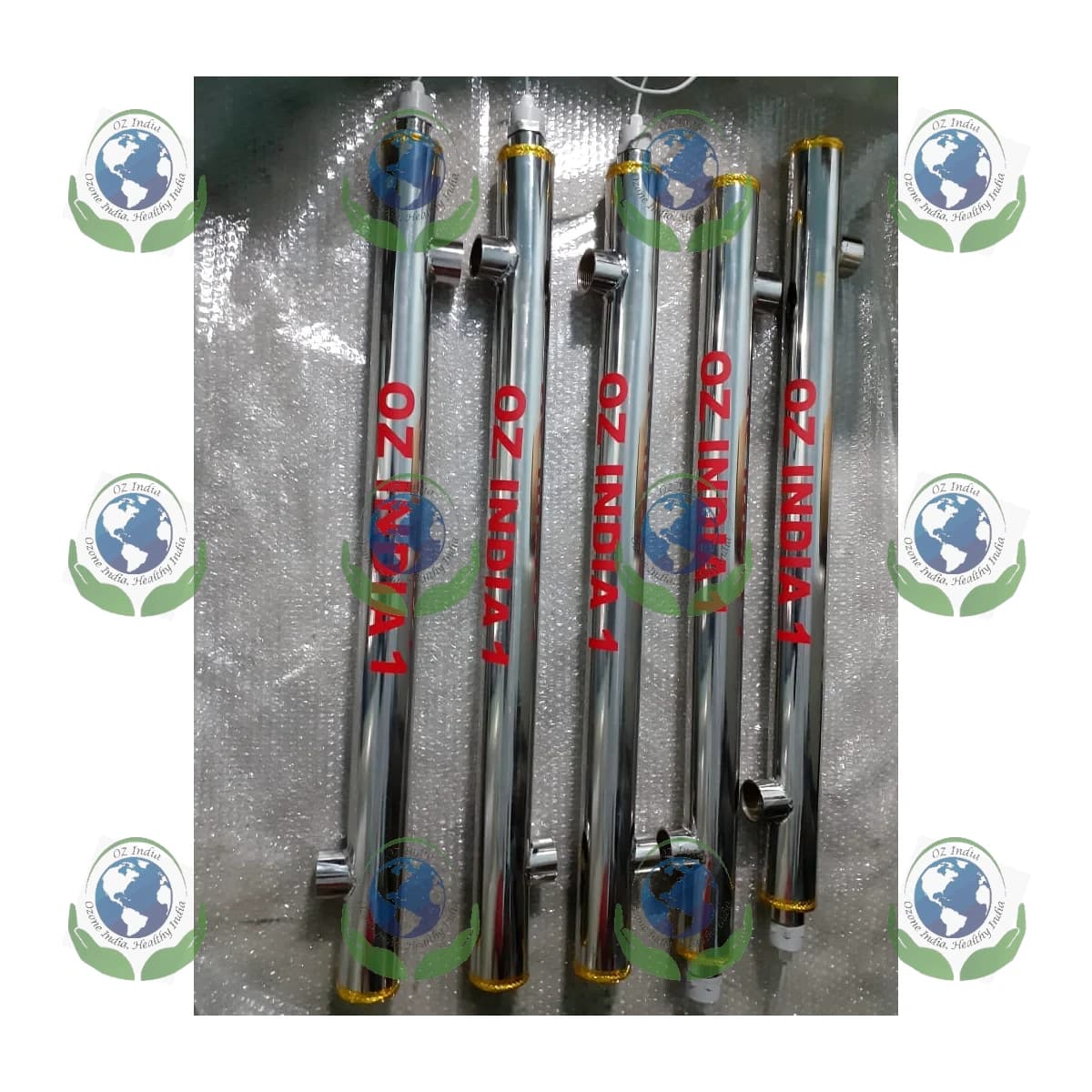
UV water disinfection for hotels, restaurants, offices, and educational institutions. HACCP and FSSAI compliant documentation. Trusted by Taj Hotels, McDonald's India, and IIT Kanpur.
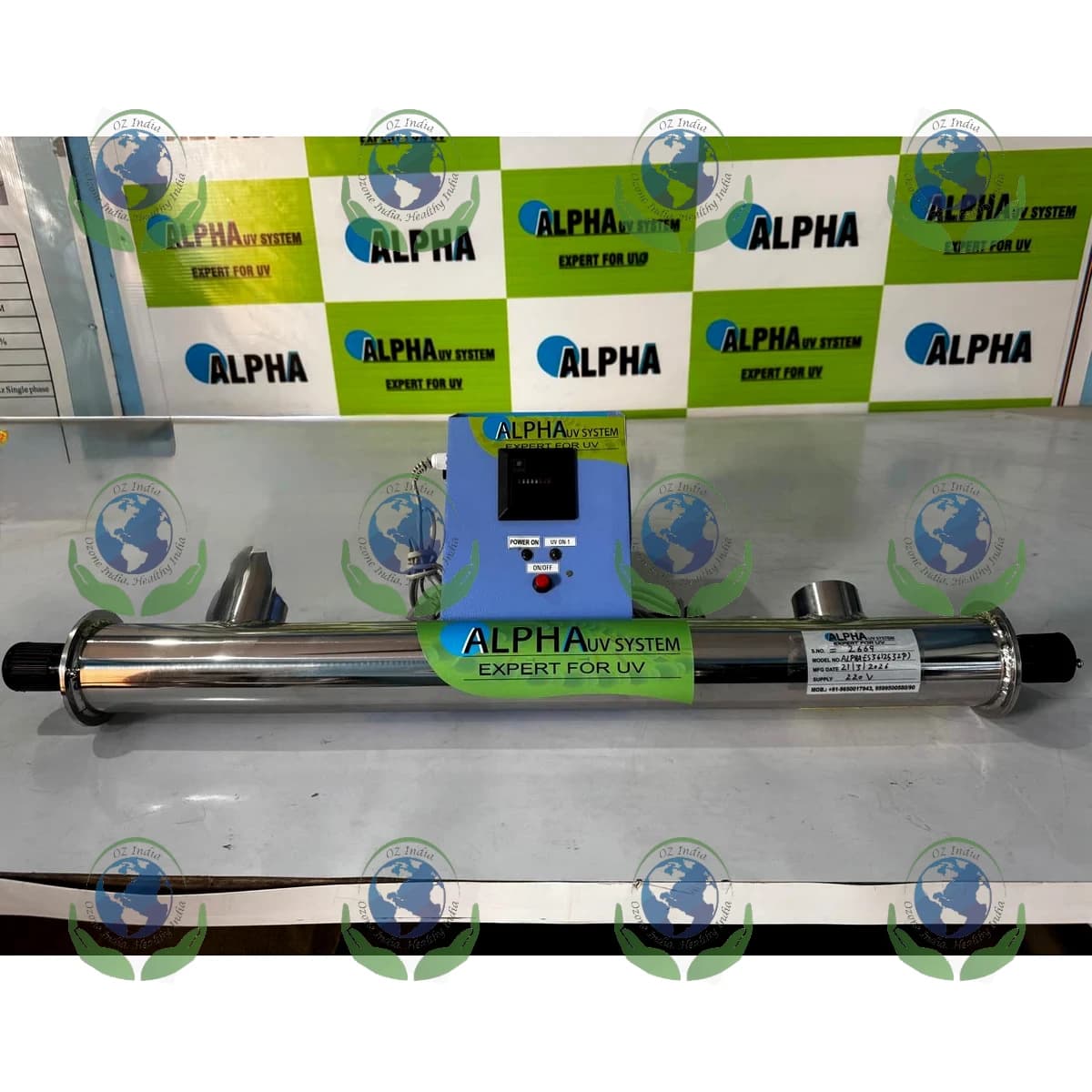
WHO-compliant UV disinfection for drinking water across all scales. From 100 LPH residential units to 50,000 LPH systems. No chemicals, no taste change, 100% water efficiency. Philips UV-C lamps.
IIT Patna Engineering
Alpha UV System IIT Patna engineers calculate UV dose from your actual water quality parameters — measured UVT, flow rate, target log reduction, and the specific compliance standard that governs your facility. Not from catalogue sizing tables or generic assumptions. Every system ships with a signed UV dose calculation report, a Philips certificate of authenticity, and compliance documentation prepared for the regulatory framework applicable to mineral water uv operations.
From measured UVT, flow rate, and target log-reduction. Signed by IIT Patna engineer.
BIS IS 13428 · FSSAI · WHO · IS 10500 — documentation prepared to the audit checklist, not generic templates.
WhatsApp your flow rate, water quality, and compliance requirement — engineering-backed quote in 2 hours.
Mon–Sat · 9 AM–6 PM IST · IIT Patna alumni on call
Send us your flow rate and compliance requirement — quote with engineering rationale in 2 hours.
+91 93183 05878
Get Quote →
Call Direct
+91 95995 00580
Tap to Call →
Send Enquiry
Detailed specifications form
Open Form →
