Manufactured in Greater NoidaGenuine Philips UV-C LampsIIT Patna Alumni on Our TeamExporting to 20+ Countries
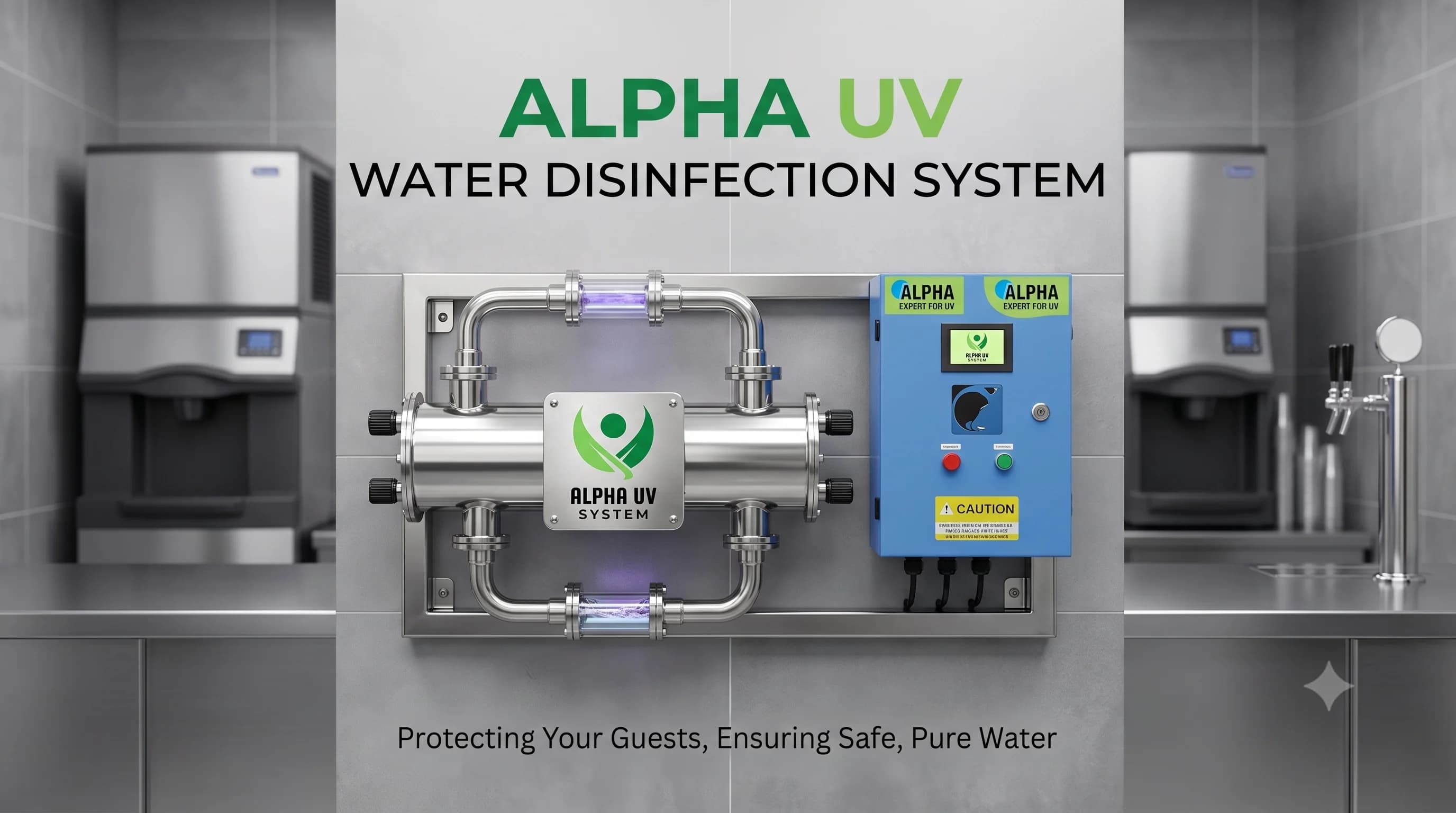
Hotels and resorts are among the most documented Legionella outbreak settings globally — a consequence of complex hot water systems, cooling towers, spa pools, and high guest turnover creating ideal conditions for Legionella pneumophila colonisation. UV disinfection on the hotel hot water recirculation loop provides continuous Legionella control while simultaneously delivering chemical-free drinking water with no taste or odour — improving guest experience measurably. Alpha UV System hotel UV systems comply with WHO Legionella Guidelines, ECDC hotel Legionella protocols, FSSAI food service water requirements, and HACCP documentation standards. Philips UV-C lamps. IIT Patna-trained engineers. 1,000–20,000 LPH range for properties from boutique hotels to large resorts.
UV Dose
40–80 mJ/cm²
Capacity
1,000 – 20,000 LPH
Hotels are the most frequently documented settings for travel-associated Legionnaires' disease globally. The European Centre for Disease Prevention and Control (ECDC) Annual Epidemiological Report on Legionnaires' Disease 2022 identifies hotels as the most common exposure setting for travel-associated Legionella cases in Europe — accounting for approximately 30% of all notified travel-associated Legionellosis cases. The combination of complex hot water systems, cooling towers, spa pools, and transient guest populations (who may be immunocompromised, elderly, or suffering from underlying respiratory conditions) creates a Legionella risk profile uniquely concentrated in the hotel sector.
The structural factors that make hotels particularly vulnerable to Legionella include: large-volume hot water storage tanks (calorifiers) where temperature stratification creates zones at 25–45°C; long pipe runs to remote guest rooms where water cools below 50°C before reaching outlets; shower heads in rooms with low occupancy (seasonal closures, wing shutdowns) where dead-leg stagnation provides ideal Legionella growth conditions; spa pools and jacuzzis with warm aerosolised water where inhalation exposure is highest; and cooling towers in HVAC systems whose aerosol drift can reach occupied guest areas.
WHO Legionella and the Prevention of Legionellosis (Bartram et al., 2007) dedicates a specific chapter to hotels, recommending: hot water maintained above 55°C throughout the distribution system; UV disinfection or chlorination as an engineering control on the hot water recirculation loop; regular flushing of infrequently used outlets; and systematic monitoring with documented Water Management Plan records.
For premium hotels, water quality is not merely a regulatory compliance matter — it directly affects the guest experience in ways that measurably impact online review scores and repeat business. UV disinfection delivers water with zero chlorine taste, odour, or chemical character. This improvement is perceptible to guests in: drinking water from in-room taps (vs. the chlorine taste that many Indian municipal supplies carry at 0.5–1.0 mg/L residual); ice cubes in bar and restaurant drinks (where chlorine taste concentrates as water freezes); tea, coffee, and beverage quality (where the water is the primary taste ingredient); and shower water (where chlorine dries skin and hair).
Hotel groups that have installed Alpha UV System commercial UV systems report this quality difference as a guest-visible improvement that does not require any explanation — guests simply comment on water quality being unexpectedly good. The combination of UV disinfection (pathogen elimination) with activated carbon filtration (chlorine taste removal) produces water that any 5-star property can serve with confidence from tap sources, eliminating dependence on bottled water for in-room guest service.
The environmental benefit — elimination of single-use plastic water bottles — also supports hotel sustainability goals, CSR reporting, and LEED certification criteria. A 200-room hotel consuming 600 in-room water bottles per day eliminates approximately 2.19 lakh plastic bottles per year with a centralised UV + filtration system. This is a tangible, communicable sustainability achievement that hotel marketing teams can feature in brand communications.
Hotels with food service operations — restaurants, in-room dining, bar, banquet, and catering — operate as food business operators (FBOs) under FSSAI and must comply with FSSAI Food Safety and Standards Regulations 2011 Schedule IV water quality requirements. Kitchen and bar water used in food preparation, ice making, beverage service, and cleaning of food contact surfaces must meet IS 10500:2012 microbiological standards.
FSSAI food license renewal audits increasingly include verification of water quality management documentation. Hotels that cannot demonstrate a documented water treatment system with monitoring and maintenance records — or that show non-conformance with IS 10500:2012 microbiological limits in periodic water testing — face FSSAI compliance notices and potential license sanctions that affect the hotel's ability to operate food service.
UV disinfection with UV intensity monitoring and alarm satisfies FSSAI's continuous CCP monitoring requirement for water treatment. The Codex Alimentarius General Principles of Food Hygiene (CXC 1-1969, 2020) defines UV disinfection as a validated CCP technology with the required monitoring, critical limit, corrective action, and verification elements. Alpha UV System provides hotels with FSSAI HACCP CCP documentation packages covering all food service water treatment points — formatted to FSSAI audit requirements and prepared by IIT Patna-trained engineers.
The hot water recirculation loop — which continuously pumps water from the calorifier through the building's hot water distribution pipework and back — is the primary UV installation point for hotel Legionella control. UV on the return leg of the hot water recirculation loop ensures that all water re-entering the calorifier from the building distribution system passes through UV disinfection before being reheated and recirculated. This provides continuous Legionella kill on all water that has passed through the distribution system, supplementing the thermal disinfection effect of the calorifier.
At 40 mJ/cm², UV delivers 5-log inactivation of Legionella pneumophila in a single pass. The combined effect of UV disinfection and temperature maintenance above 55°C in the calorifier reduces Legionella to undetectable levels in hotel hot water systems that have been properly remediated and maintained. For hotels with new plumbing systems, UV installation at commissioning prevents initial Legionella colonisation. For hotels with existing systems that have tested positive for Legionella, UV installation is combined with initial thermal shock treatment (70°C pasteurisation) and dead-leg elimination.
Alpha UV System hot water UV units for hotels are supplied in SS316L construction (appropriate for hot water applications up to 70°C), with UV intensity alarm output for connection to the hotel's BMS (building management system) and annual lamp replacement documentation compatible with hotel engineering maintenance programmes.
A comprehensive hotel water UV programme covers multiple distinct water systems, each with different requirements:
Kitchen and bar water: UV on the kitchen cold water supply line eliminates pathogens from food preparation water and produces chlorine-free water for beverages. 40 mJ/cm² standard dose at 1,000–5,000 LPH depending on kitchen size.
Swimming pool UV: Medium-pressure Philips UV-C lamps destroy chloramines and inactivate Cryptosporidium in the pool recirculation circuit. Sized to 100% of recirculation flow rate at 40–60 mJ/cm². Reduces chlorine consumption by 50–80%.
Spa pool and jacuzzi UV: Hot tub and spa pools with water at 36–40°C face elevated Legionella risk from aerosolised warm water. UV at 60–80 mJ/cm² on the spa recirculation circuit combined with low-level chlorine residual (0.5–1.0 ppm) provides the dual barrier required by WHO spa pool guidelines.
Cooling tower make-up UV: For hotel properties with chiller plants and cooling towers, UV on cooling tower make-up water at 30–40 mJ/cm² reduces Legionella in the tower sump and controls biofouling.
Alpha UV System designs integrated hotel water UV programmes covering all of these water systems, with a single supplier relationship, coordinated documentation, and annual maintenance contracts for the entire hotel water treatment programme.
Alpha UV System commercial UV systems for hotels are designed for minimum operational disruption: compact footprint (fits in existing plant room or under-sink locations), annual Philips lamp replacement (no specialist UV expertise required), and remote UV intensity monitoring via BMS alarm output so that the hotel's engineering team is notified immediately of any UV system alarm.
For hotel groups with multiple properties, Alpha UV System provides standardised UV systems across the portfolio — same lamp model, same maintenance procedure, same documentation format — simplifying training for multi-property engineering teams and enabling bulk Philips lamp procurement for the group.
Hotel UV system maintenance requirements: annual Philips UV-C lamp replacement; annual quartz sleeve inspection and cleaning; annual UV intensity sensor verification; O-ring seal check every 2–3 years. Alpha UV System offers Annual Maintenance Contracts (AMC) for hotel customers covering all of these maintenance elements with 24–48 hour response for all service calls, ensuring UV system uptime that maintains continuous Legionella protection and FSSAI compliance.
Contact Alpha UV System on WhatsApp at 9318305878 or call 9599500580 for hotel UV specifications, Legionella Water Safety Plan documentation support, and quotation within 24–48 hours. Installations across Delhi NCR, Mumbai, Bengaluru, Rajasthan, and all major Indian hospitality markets.
UV disinfection is the most cost-effective way for an Indian hotel to implement and document WHO-compliant Legionella control. The WHO Legionella Hotel Guidelines require a written Water Management Plan identifying hazardous systems, engineering controls, monitoring procedures, corrective action triggers, and documentation. UV disinfection on the hot water recirculation loop, documented with UV intensity logs and annual lamp certificates, satisfies the engineering control and monitoring documentation requirements of the WHO WMP framework.
From a liability protection perspective, a hotel that has implemented and documented a WHO-compliant Legionella control programme — including UV disinfection, temperature management, outlet flushing protocols, and periodic microbiological testing — is in a fundamentally stronger position in the event of a Legionella-associated illness claim than a hotel that has relied on chlorine alone or has no documented water management programme.
ECDC Legionella outbreak investigation protocols identify hotels without documented Legionella control programmes as having significantly higher regulatory and reputational exposure when disease clusters are investigated. Alpha UV System provides hotels with the complete Legionella Water Safety documentation package — UV system commissioning records, Philips lamp certificates, UV intensity monitoring logs, and maintenance records — that demonstrates due diligence under WHO and ECDC guidance. Protecting guests is the priority; protecting the hotel's brand and liability position is the consequence.
Recommended Products
IIT Patna engineers recommend these systems for hospitality uv applications based on flow rate, required UV dose, and compliance standard. Both systems use genuine Philips UV-C lamps and ship with complete compliance documentation.
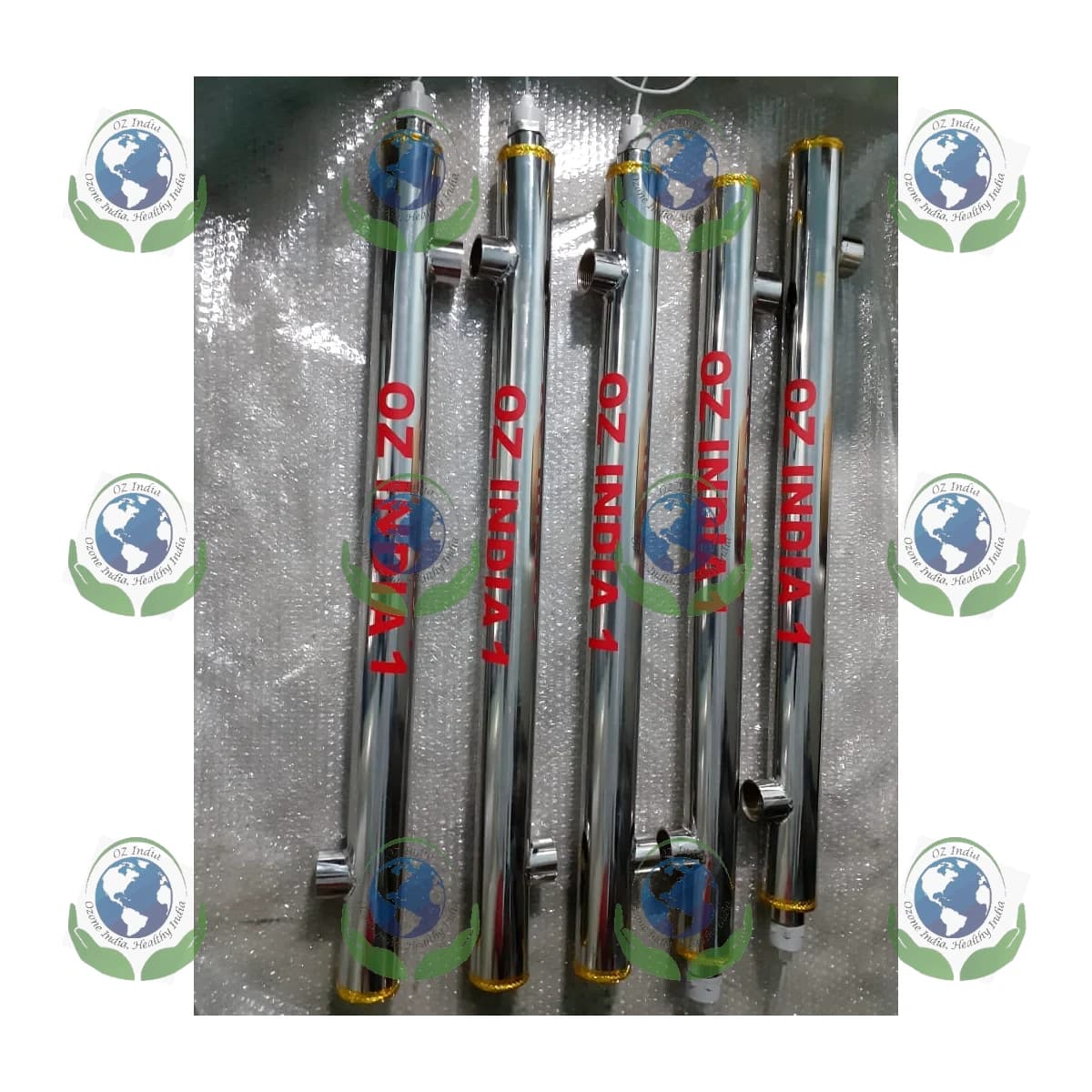
UV water disinfection for hotels, restaurants, offices, and educational institutions. HACCP and FSSAI compliant documentation. Trusted by Taj Hotels, McDonald's India, and IIT Kanpur.
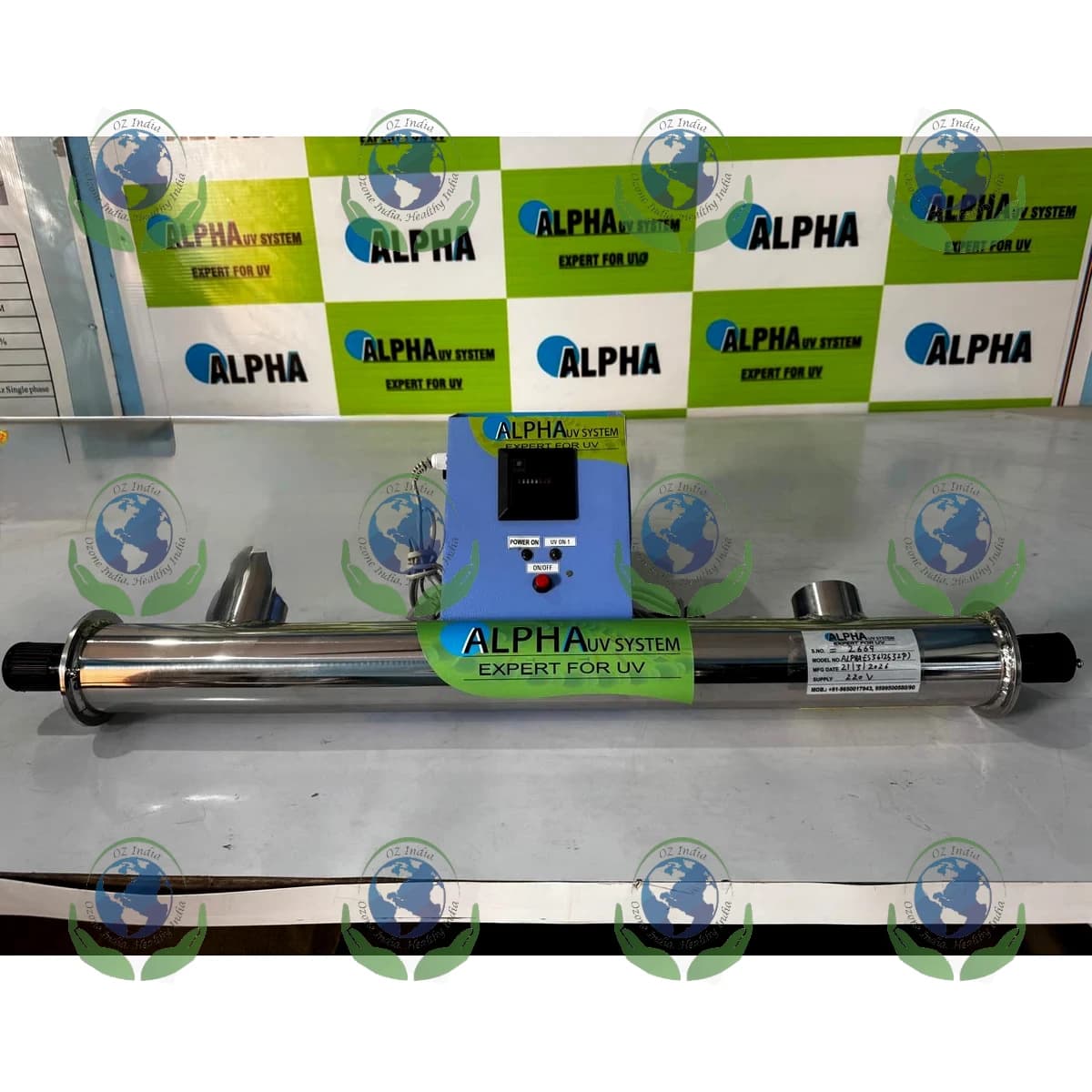
WHO-compliant UV disinfection for drinking water across all scales. From 100 LPH residential units to 50,000 LPH systems. No chemicals, no taste change, 100% water efficiency. Philips UV-C lamps.
IIT Patna Engineering
Alpha UV System IIT Patna engineers calculate UV dose from your actual water quality parameters — measured UVT, flow rate, target log reduction, and the specific compliance standard that governs your facility. Not from catalogue sizing tables or generic assumptions. Every system ships with a signed UV dose calculation report, a Philips certificate of authenticity, and compliance documentation prepared for the regulatory framework applicable to hospitality uv operations.
From measured UVT, flow rate, and target log-reduction. Signed by IIT Patna engineer.
WHO Legionella Guidelines · FSSAI · HACCP · BIS IS 10500 — documentation prepared to the audit checklist, not generic templates.
WhatsApp your flow rate, water quality, and compliance requirement — engineering-backed quote in 2 hours.
Mon–Sat · 9 AM–6 PM IST · IIT Patna alumni on call
Send us your flow rate and compliance requirement — quote with engineering rationale in 2 hours.
+91 93183 05878
Get Quote →
Call Direct
+91 95995 00580
Tap to Call →
Send Enquiry
Detailed specifications form
Open Form →
