Manufactured in Greater NoidaGenuine Philips UV-C LampsIIT Patna Alumni on Our TeamExporting to 20+ Countries
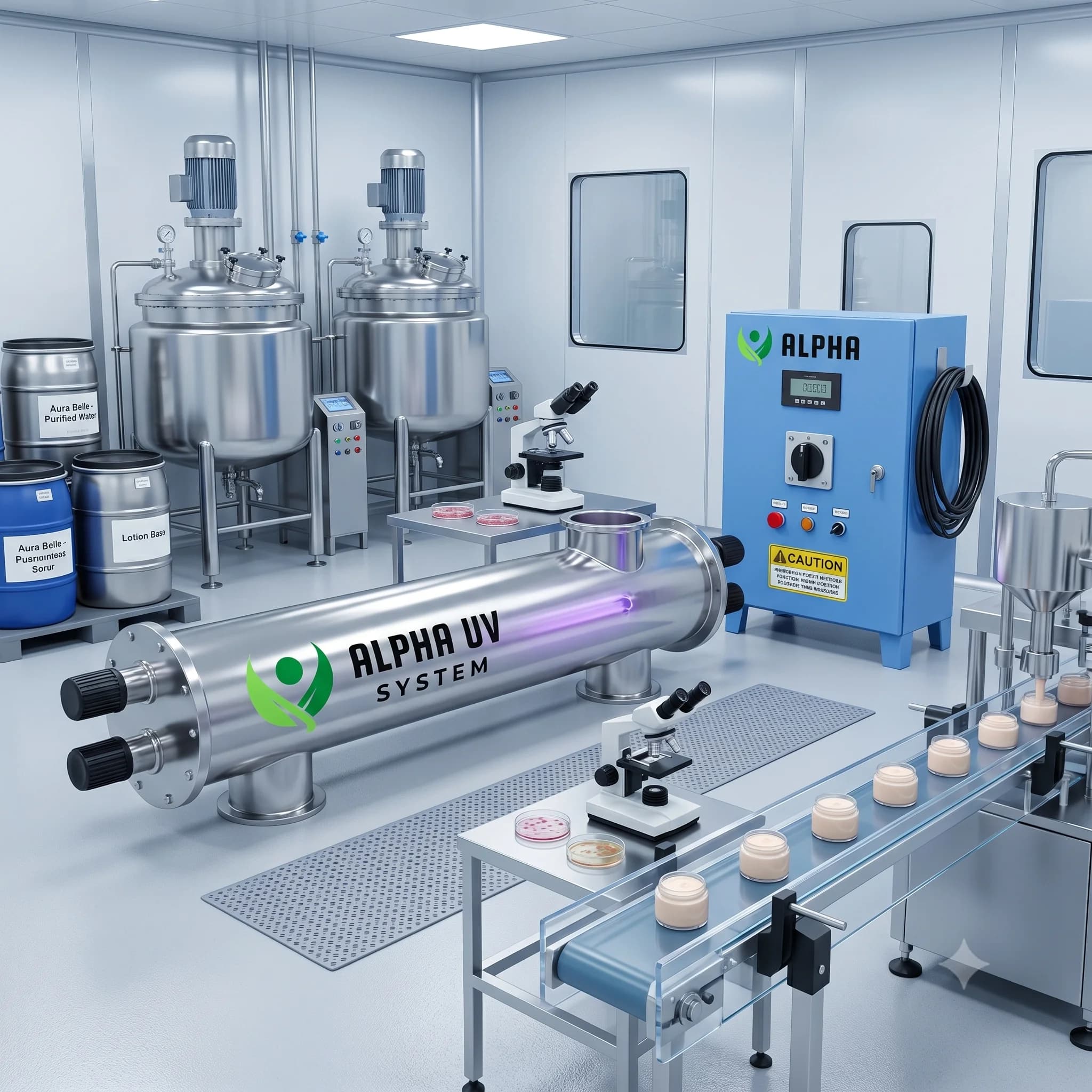
Cosmetic and personal care products — creams, lotions, serums, shampoos, baby care formulations, and colour cosmetics — use water as their primary ingredient and most critical quality input. The microbiological quality of this process water determines whether the finished product meets ISO 22716 GMP standards, passes preservative efficacy testing, and reaches consumers safely. UV disinfection after reverse osmosis provides pharmaceutical-grade process water quality without chemical residuals that could react with sensitive cosmetic actives or compromise preservative efficacy. Alpha UV System supplies ISO 22716-compatible UV units for Indian cosmetic manufacturers from 500 to 20,000 LPH, with documentation packages formatted for CDSCO and EU GMP audit requirements.
UV Dose
40–80 mJ/cm²
Capacity
500 – 20,000 LPH
Water is the single largest ingredient in most cosmetic formulations — forming 60–85% of emulsions (creams, lotions), 80–95% of shampoos and conditioners, and essentially 100% of toners and micellar waters. Unlike water used in industrial processes, cosmetic process water becomes part of the finished product that is applied directly to human skin, scalp, around the eyes, or — in the case of oral hygiene products — into the mouth. The microbiological quality of this water is therefore a direct determinant of consumer safety.
Bacteria introduced through contaminated process water can do one of two things in a finished cosmetic: they can be killed by the preservative system (if the system is adequate) or they can survive and grow during shelf life, causing product spoilage, changes in appearance and odour, and in worst cases, consumer infections. ISO 17516:2014 (Cosmetics — Microbiology — Microbiological Limits) sets finished product limits that reflect this reality — TPC ≤1,000 CFU/g for adult products, ≤100 CFU/g for eye and oral products, ≤50 CFU/g for baby leave-on products, and absence of Pseudomonas aeruginosa, Staphylococcus aureus, E. coli, and Candida albicans in all product categories.
Starting with microbiologically poor process water forces the preservative system to do more work — and increases the risk that preservatives will be overwhelmed, particularly in natural and "clean beauty" formulations with reduced preservative loadings. Starting with UV-disinfected process water (<1 CFU/mL, all named pathogens absent) means the preservative system operates against a very low initial challenge, making preservative efficacy test compliance easier and allowing formulators to achieve clean beauty claims without compromising safety.
Three pathogens are of particular significance in cosmetic microbiology, identified in both EU Cosmetics Regulation 1223/2009 and ISO 17516 as mandatory absence criteria in all cosmetic products:
Pseudomonas aeruginosa is an opportunistic pathogen responsible for serious eye infections — including corneal ulcers that can lead to permanent vision loss — from contaminated eye cosmetics and contact lens solutions. It is notably resistant to many preservative systems used in cosmetics, grows in water containing only trace dissolved organics (including activated carbon-filtered water), and can colonise cosmetic distribution loops rapidly. Published UV dose data (USEPA EPA 815-R-06-007, 2006; Hijnen et al., Water Research, 2006) confirms 4-log inactivation at 10.4 mJ/cm². At 40 mJ/cm², the margin of safety over the minimum effective dose is nearly 4×.
Staphylococcus aureus is relevant particularly for skin care and baby cosmetics, where it can cause impetigo and other skin infections in immunocompromised individuals and neonates. 4-log inactivation requires 8.0 mJ/cm² — well within standard UV system capability at 40 mJ/cm².
Candida albicans, the causative organism of yeast infections in intimate hygiene products and diaper creams, requires 20–25 mJ/cm² for 4-log inactivation — also achievable at the standard 40 mJ/cm² dose with a substantial safety margin.
Cosmetic manufacturers install a dedicated purified water system separate from general plant utilities. The standard treatment train for cosmetic GMP water is: raw water intake → 5 µm pre-filter → multimedia filter → activated carbon filter → water softener → reverse osmosis → UV disinfection → storage tank → distribution loop (with UV on loop return). Each stage has a defined purpose, and UV is the final and most critical microbiological control point.
RO membranes reject 99.5–99.9% of bacteria by physical size exclusion, but the trace bacteria that pass through RO membranes — and bacteria that are introduced downstream of the RO by airborne contamination or maintenance — are the target for UV polishing. Without UV after RO, these trace bacteria can colonise the storage tank and distribution loop, forming biofilms in dead-legs and low-velocity sections that periodically shed bacteria into the water supply.
UV positioned on the loop return line provides continuous re-disinfection of recirculated water before it returns to the storage tank, preventing biofilm establishment in distribution pipework. The UV chamber in a cosmetic water loop should be sized for 100% of the loop recirculation flow at 40–60 mJ/cm² — not just for the occasional batch draw-off flow.
Different cosmetic formulations place different demands on process water quality. Eye cosmetics and contact lens products require the most stringent water quality — TPC <1 CFU/mL and absence of all specified pathogens is the practical minimum for products that contact the eye's mucosal surface. Baby products (shampoos, lotions, wipes) require equally rigorous water quality, because neonates and infants have immature immune systems that cannot resist even normally non-pathogenic organisms.
Adult skin and hair products allow slightly higher water TPC limits in finished product (ISO 17516 specifies ≤1,000 CFU/g), but process water quality should still be controlled to <10 CFU/mL to provide an adequate safety margin during the production process. Natural and organic cosmetics — which typically use reduced or alternative preservative systems — are more dependent on process water microbiological quality than conventionally preserved products, because the preservative system provides less backup protection if water quality is marginal.
Alpha UV System UV units sized for cosmetic applications deliver <1 CFU/mL and absence of all ISO 22716 specified pathogens consistently, providing sufficient water quality for every cosmetic category from baby leave-on to adult rinse-off products. This universal compliance eliminates the need to manage different water quality standards for different production lines.
The economics of UV disinfection for cosmetic process water are compelling. The capital cost of a UV system for a cosmetic water loop is typically ₹1–5 lakh depending on loop flow rate. Annual operating costs — lamp power, annual lamp replacement, quartz sleeve inspection — are typically ₹0.6–1.5 lakh per year for a mid-scale cosmetic plant.
Alternative water disinfection approaches are significantly more expensive in operation and introduce complications that UV avoids. Chlorination requires activated carbon dechlorination to achieve zero residual at point of use (chlorine residual interferes with certain cosmetic actives and complicates preservative efficacy testing), chemical handling and storage infrastructure, and more complex monitoring documentation. Ozone requires an ozone generator, contactor, and ozone destructor (UV at 254 nm for ozone decomposition), plus continuous ozone monitoring to confirm absence of residual ozone before the water enters the formulation. Both approaches involve chemical residual management that UV eliminates entirely.
The invisible cost of inadequate process water quality — cosmetic batch rejection due to microbiological failure, product recall costs, regulatory enforcement, and reputational damage — dwarfs the cost of UV installation. A single batch rejection event in a cosmetic plant supplying major retailers typically costs ₹5–50 lakh in raw material write-off, rework, testing, delayed shipment penalties, and retailer chargebacks. UV installation costing ₹2–5 lakh pays for itself on the avoidance of a single batch rejection.
ISO 22716:2007 (Good Manufacturing Practices for Cosmetics) is the international GMP standard adopted by the EU as the reference standard under Cosmetics Regulation 1223/2009 and implemented in India through CDSCO's Cosmetics Rules 2020 Schedule FF. Section 6.2 of ISO 22716 addresses production utilities including water, specifying that water quality must be appropriate for its use and verified by testing, with documented maintenance and monitoring records for water treatment systems.
For Indian cosmetic manufacturers supplying EU exporters, major domestic retail chains, or international contract manufacturing clients, ISO 22716 compliance or CDSCO GMP certification is frequently a mandatory supplier qualification requirement. Alpha UV System provides a comprehensive GMP documentation package for cosmetic UV installations that is formatted for direct integration into ISO 22716 quality management files:
This documentation package is reviewed and updated by our IIT Patna-trained engineers to ensure continued alignment with evolving CDSCO and ISO 22716 requirements.
Indian cosmetic manufacturers are increasingly targeting export markets — the EU, GCC countries, ASEAN, and the USA — where ISO 22716 compliance is mandatory for market access and clean beauty positioning commands a premium. UV water treatment supports export market qualification in two ways: it provides the auditable process water quality documentation required by importing country regulatory authorities, and it eliminates chemical water treatment residuals that are incompatible with clean beauty and organic cosmetic claims.
The EU Cosmetics Regulation 1223/2009 requires that cosmetic products are safe for their intended use under foreseeable conditions of use, and the Responsible Person in the EU must maintain a Product Information File (PIF) that includes evidence of GMP compliance for all production inputs including process water. UV intensity monitoring records from Alpha UV System's data-logging controllers provide directly usable evidence of process water quality control for EU PIF documentation.
For GCC market access — particularly the UAE, Saudi Arabia, and Kuwait — cosmetic imports must be registered with national health authorities that increasingly require GMP certification or GMP audit reports as part of the registration dossier. Process water UV treatment with IQ/OQ/PQ documentation is a directly auditable quality control point that supports cosmetic product registration applications in GCC markets. Contact Alpha UV System via WhatsApp 9318305878 for export documentation support in cosmetic UV installations.
Recommended Products
IIT Patna engineers recommend these systems for cosmetics uv applications based on flow rate, required UV dose, and compliance standard. Both systems use genuine Philips UV-C lamps and ship with complete compliance documentation.
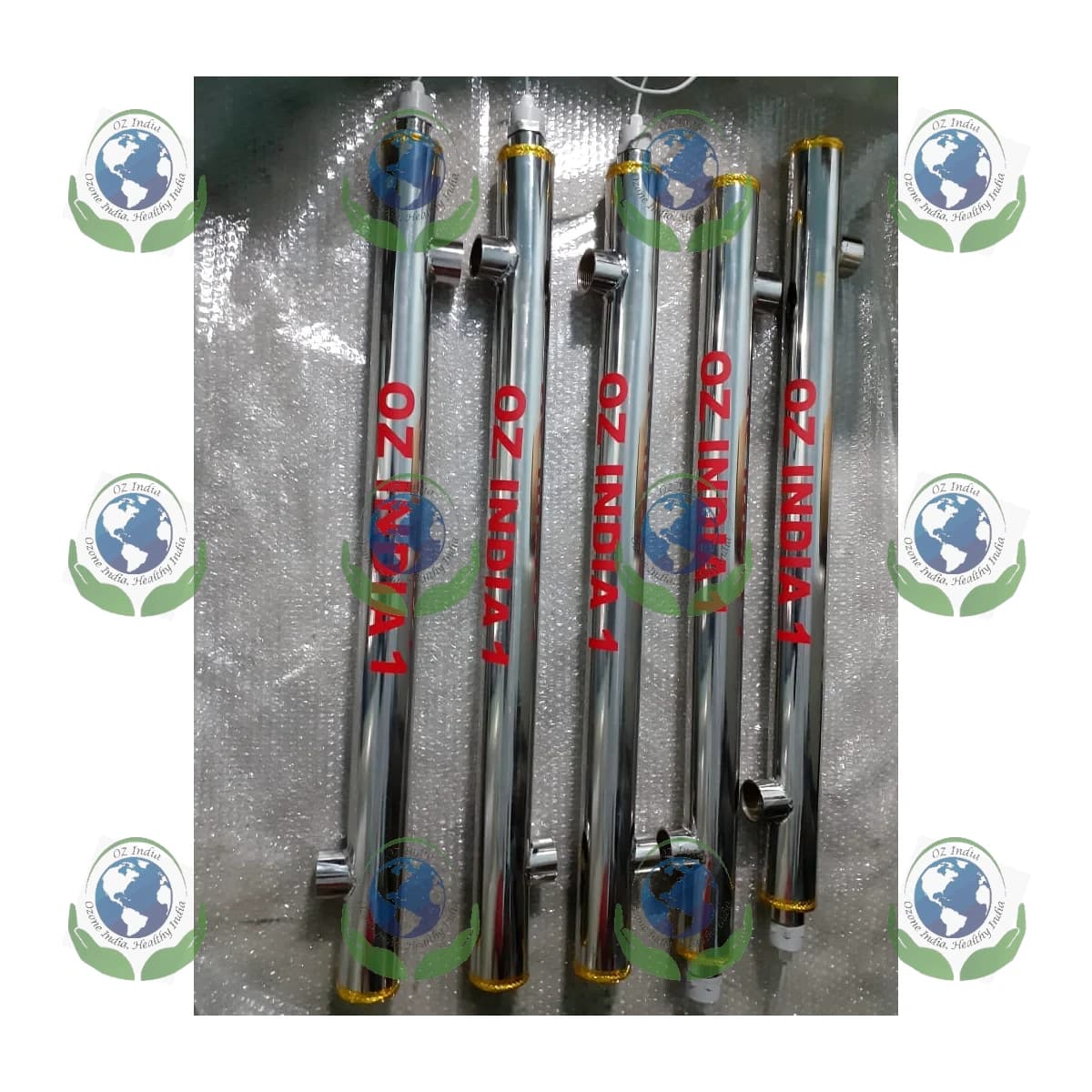
UV water disinfection for hotels, restaurants, offices, and educational institutions. HACCP and FSSAI compliant documentation. Trusted by Taj Hotels, McDonald's India, and IIT Kanpur.
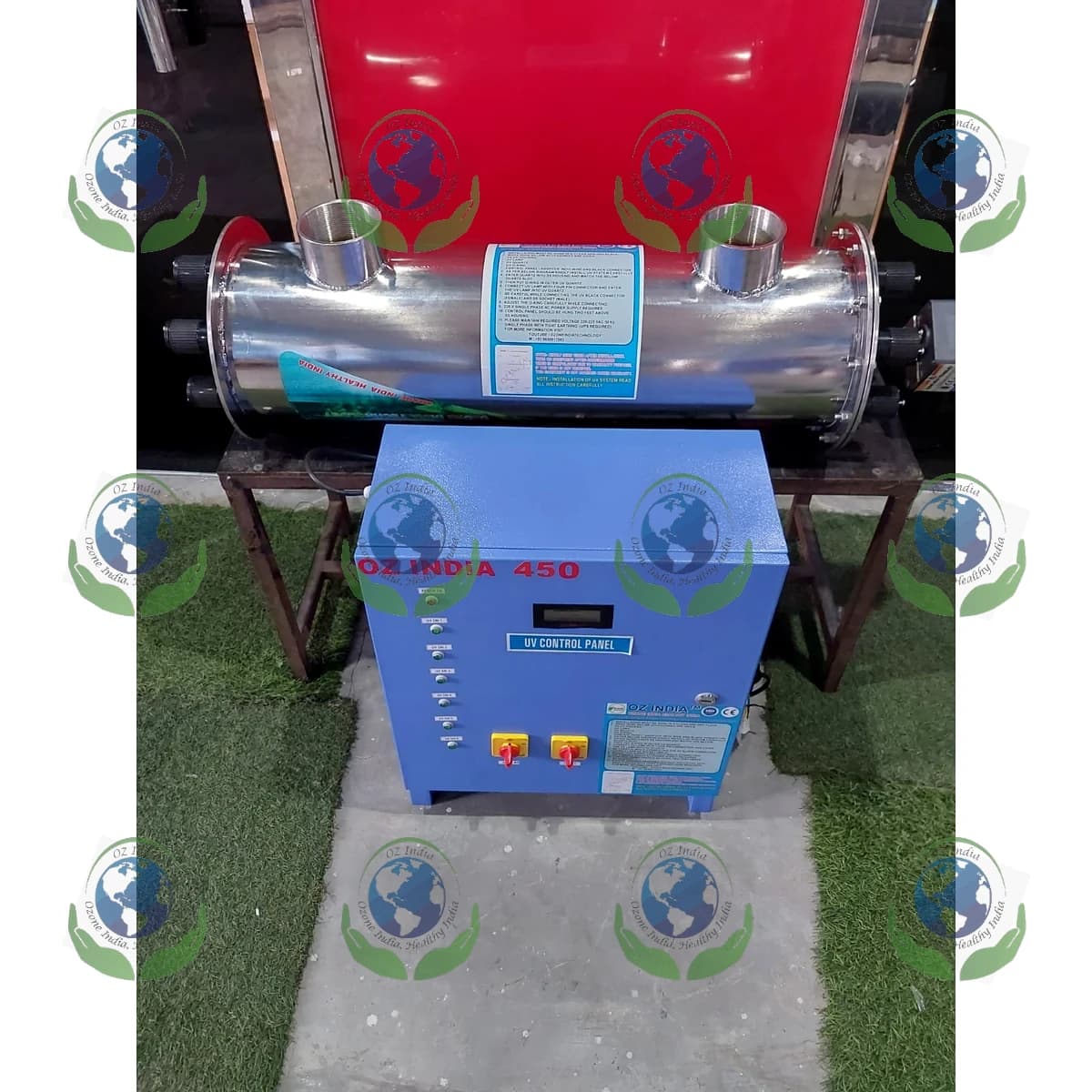
High-flow UV water treatment for pharmaceutical WFI, food & beverage process water, and industrial applications. Revised Schedule M 2025, HACCP, and FSSAI compliant. IQ/OQ/PQ documentation.
IIT Patna Engineering
Alpha UV System IIT Patna engineers calculate UV dose from your actual water quality parameters — measured UVT, flow rate, target log reduction, and the specific compliance standard that governs your facility. Not from catalogue sizing tables or generic assumptions. Every system ships with a signed UV dose calculation report, a Philips certificate of authenticity, and compliance documentation prepared for the regulatory framework applicable to cosmetics uv operations.
From measured UVT, flow rate, and target log-reduction. Signed by IIT Patna engineer.
ISO 22716 GMP · CDSCO Cosmetics Rules 2020 · BIS IS 10500 · FSSAI — documentation prepared to the audit checklist, not generic templates.
WhatsApp your flow rate, water quality, and compliance requirement — engineering-backed quote in 2 hours.
Mon–Sat · 9 AM–6 PM IST · IIT Patna alumni on call
Send us your flow rate and compliance requirement — quote with engineering rationale in 2 hours.
+91 93183 05878
Get Quote →
Call Direct
+91 95995 00580
Tap to Call →
Send Enquiry
Detailed specifications form
Open Form →
