Manufactured in Greater NoidaGenuine Philips UV-C LampsIIT Patna Alumni on Our TeamExporting to 20+ Countries
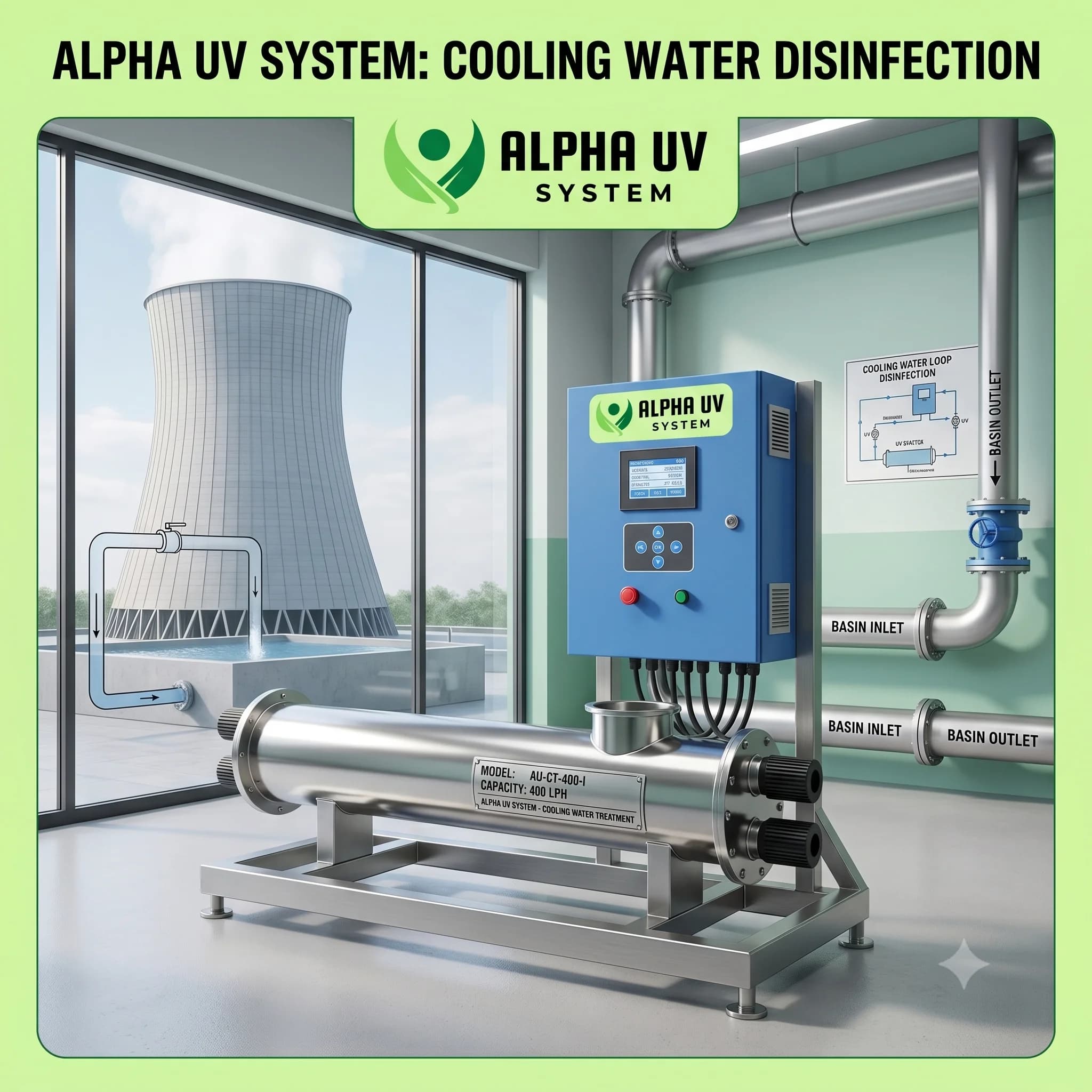
Cooling towers are the primary amplification site for Legionella pneumophila in industrial and commercial buildings across India, and uncontrolled biofouling in cooling circuits costs Indian industry thousands of crore rupees annually in energy losses and maintenance. UV disinfection of cooling tower make-up water and side-stream recirculation eliminates Legionella before it colonises the tower, reduces total bacterial count by greater than 4 log, and cuts biocide chemical costs by 50–70% compared to chemical-only programs. Alpha UV System supplies UV units aligned with ASHRAE Standard 188-2018 for Indian industrial plants, commercial complexes, hotels, hospitals, and data centres from 5,000 to 5,00,000 LPH.
UV Dose
40–100 mJ/cm²
Capacity
5,000 – 5,00,000 LPH
Legionella pneumophila is a gram-negative bacterium that thrives at water temperatures of 25–45°C, proliferating within biofilms and inside free-living amoebae (Acanthamoeba, Naegleria) that colonise water system surfaces. Primary human infection occurs through inhalation of fine aerosols (1–5 µm droplets reaching the alveoli) generated by cooling towers, showerheads, spa pools, and decorative fountains. Legionnaires' disease — the severe pneumonia form of Legionella infection — carries a 5–15% case fatality rate in otherwise healthy adults and up to 40% in immunocompromised individuals. It is among the most serious waterborne bacterial diseases measured by clinical severity.
The WHO publication Legionella and the Prevention of Legionellosis (Bartram et al., WHO Press, 2007) established the scientific consensus on Legionella risk management that underlies all major international standards including ASHRAE 188-2018 and the UK's HSE L8 Approved Code of Practice. This consensus identifies cooling towers as the highest-risk water system in the built environment, particularly in warm climates where cooling tower basins and distribution piping remain permanently at Legionella amplification temperatures.
Indian cooling towers face several specific risk factors that amplify Legionella concern compared to European or North American facilities. Ambient temperatures in most of India (averaging 30–42°C for significant portions of the year) mean that cooling tower basins are permanently within the optimal Legionella growth range, with no winter cold-season die-off that European facilities benefit from. Make-up water quality in India — often from surface water sources (rivers, canals, municipal systems with high seasonal turbidity) — carries higher baseline Legionella counts from environmental sources. And maintenance culture in Indian industry, while rapidly improving, has not historically included systematic Legionella monitoring programs of the type mandated in European facilities by workplace health and safety legislation.
UV disinfection at 254 nm controls Legionella through direct DNA photodamage, rendering the organisms unable to replicate. Legionella pneumophila is moderately UV-sensitive, requiring approximately 30–40 mJ/cm² for 4-log (99.99%) inactivation in clear water. This is within the range achievable by standard UV systems sized for cooling tower make-up water flow rates, making UV a practical primary control for the planktonic Legionella population in cooling tower water.
The critical strategic question is where to apply UV in the cooling circuit. Two standard configurations exist: make-up water UV (treating incoming fresh water before it enters the tower basin) and side-stream recirculation UV (treating a continuous fraction of recirculating water). Make-up water UV prevents introduction of environmental Legionella with each new water batch — the primary colonisation pressure. Side-stream UV, typically sized to treat 10–25% of the recirculating flow, reduces the Legionella count in the circulating water itself. The combination of both make-up and side-stream UV provides the most complete Legionella control in the water phase, but make-up UV alone delivers 70–80% of the benefit at significantly lower cost and system complexity.
Beyond Legionella, biofouling — the formation of microbial and mineral films on condenser tube surfaces, cooling tower fill, and basin floors — directly reduces chiller and heat exchanger efficiency and increases maintenance costs. The economic impact of biofouling is well-quantified. The US Department of Energy estimates that a 0.1 mm biofilm layer on condenser tube surfaces reduces heat transfer efficiency by approximately 25%. In a 500 TR chiller plant operating at Indian electricity prices (₹8–10/kWh), this efficiency reduction translates to ₹8–15 lakh per year in additional electricity costs, plus accelerated condenser tube wear and reduced chiller life.
UV treatment of cooling tower make-up water significantly reduces the biological loading entering the cooling system, slowing the rate of biofilm formation on condenser tube surfaces. Field experience at Alpha UV System installations in Indian industrial cooling towers consistently shows 40–60% reduction in biofilm accumulation rate compared to pre-UV installation periods, extending condenser tube cleaning intervals from quarterly to semi-annual or annual. The energy and maintenance savings from this biofouling reduction alone — independent of Legionella risk management — typically provide sufficient economic justification for UV installation at medium-to-large cooling tower facilities.
The effectiveness of UV treatment in cooling tower water is determined by the UV transmittance (UVT) of the water at 254 nm. Cooling tower water quality varies significantly depending on the make-up water source, cycles of concentration, treatment chemical loading, and fouling conditions. Municipal make-up water typically has UVT of 88–93% — excellent for UV treatment. Surface water make-up (from rivers or canals, common in rural and semi-urban industrial areas) typically has UVT of 72–82% depending on turbidity.
As cooling tower water concentrates through evaporation cycles, dissolved solids, scale inhibitors, and corrosion inhibitors accumulate, reducing UVT. At 3× concentration (the typical operating point for a well-controlled tower), UVT may fall to 70–75%. At higher concentration cycles (used to conserve water in water-stressed regions), UVT can fall below 65%, at which point UV sizing must account for the reduced transmittance. Alpha UV System conducts UVT measurement on water samples from proposed installation points before finalising UV equipment specification, ensuring that the UV dose delivered at actual water quality conditions meets the Legionella control target.
The scientific literature on biofilm disinfection — particularly Simões et al. (Biofouling, 2009) and Flemming (Applied Microbiology and Biotechnology, 2002) — establishes that planktonic (free-swimming) bacteria are substantially more sensitive to UV than sessile bacteria in established biofilms, while the reverse is true for many chemical biocides that rely on surface contact to penetrate biofilm structures. This fundamental difference in mode of action underlies the recommendation to combine UV (for planktonic bacteria) with chemical biocides (for surface biofilm) rather than using either alone.
UV at 40 mJ/cm² achieves 4-log inactivation of planktonic Legionella, Pseudomonas aeruginosa, E. coli, and most other cooling tower bacteria in a single pass through the UV chamber. Free chlorine at 1 mg/L achieves similar results for planktonic bacteria but has better penetration into thin biofilms on metal surfaces, where it can inactivate sessile bacteria that UV cannot reach through the tower fill or condenser tube wall. The optimal cooling tower water management strategy uses UV as the primary tool for the water phase (where UV is most effective) and retains low-dose chlorine or bromine for surface biofilm control (where chemical biocides have the advantage). This hybrid approach consistently outperforms either UV alone or chemical-only programs at equal or lower total treatment cost.
ASHRAE Standard 188-2018 (Legionellosis: Risk Management for Building Water Systems) requires facilities with cooling towers to implement a documented Water Management Program (WMP) that identifies hazardous conditions, establishes control measures with measurable limits, documents monitoring activities, and specifies corrective actions. Facilities that do not comply with ASHRAE 188 face increasing difficulty in obtaining commercial liability insurance, satisfying international brand standards requirements (for hotel operators), and demonstrating due-diligence Legionella risk management in the event of a Legionnaires' disease outbreak linked to their facility.
UV treatment of cooling tower make-up water and side-stream flow is identified in ASHRAE 188 Annex C as an effective control measure that provides direct documentation of Legionella risk management actions. Alpha UV System provides an ASHRAE 188-compatible WMP documentation package with every cooling tower UV installation:
This documentation package directly satisfies ASHRAE 188 WMP requirements and provides legally defensible evidence of Legionella risk management for facilities that face potential liability exposure.
Alpha UV System's IIT Patna-trained engineers conduct a site assessment for each cooling tower UV installation, covering:
Make-up Water Flow Assessment: Confirming actual make-up flow rate (not design capacity) by flow measurement or water meter reading, identifying the optimal installation point on the make-up line (after strainer, before tower basin inlet).
Side-Stream Loop Design: Where side-stream UV is required, designing the bleed-and-return circuit to treat the specified fraction of recirculating flow without creating dead-legs or low-velocity zones that promote biofilm formation.
Water Quality Analysis: UVT measurement of both make-up and tower water, turbidity testing, and assessment of dissolved iron and manganese that can reduce UVT at higher concentrations.
ASHRAE 188 Pre-assessment: Review of existing Water Management Program documentation (if any) and identification of control measures and monitoring frequencies that the UV installation will support.
Commissioning includes UV dose validation at actual flow rate and UVT, UV intensity sensor calibration, alarm set-point configuration, and baseline Legionella culture testing. Full commissioning documentation is provided within 5 business days of commissioning date.
For 24–48 hour enquiry response on cooling tower UV specifications, capacity requirements, and pricing, contact Alpha UV System via WhatsApp 9318305878.
Recommended Products
IIT Patna engineers recommend these systems for cooling tower uv applications based on flow rate, required UV dose, and compliance standard. Both systems use genuine Philips UV-C lamps and ship with complete compliance documentation.
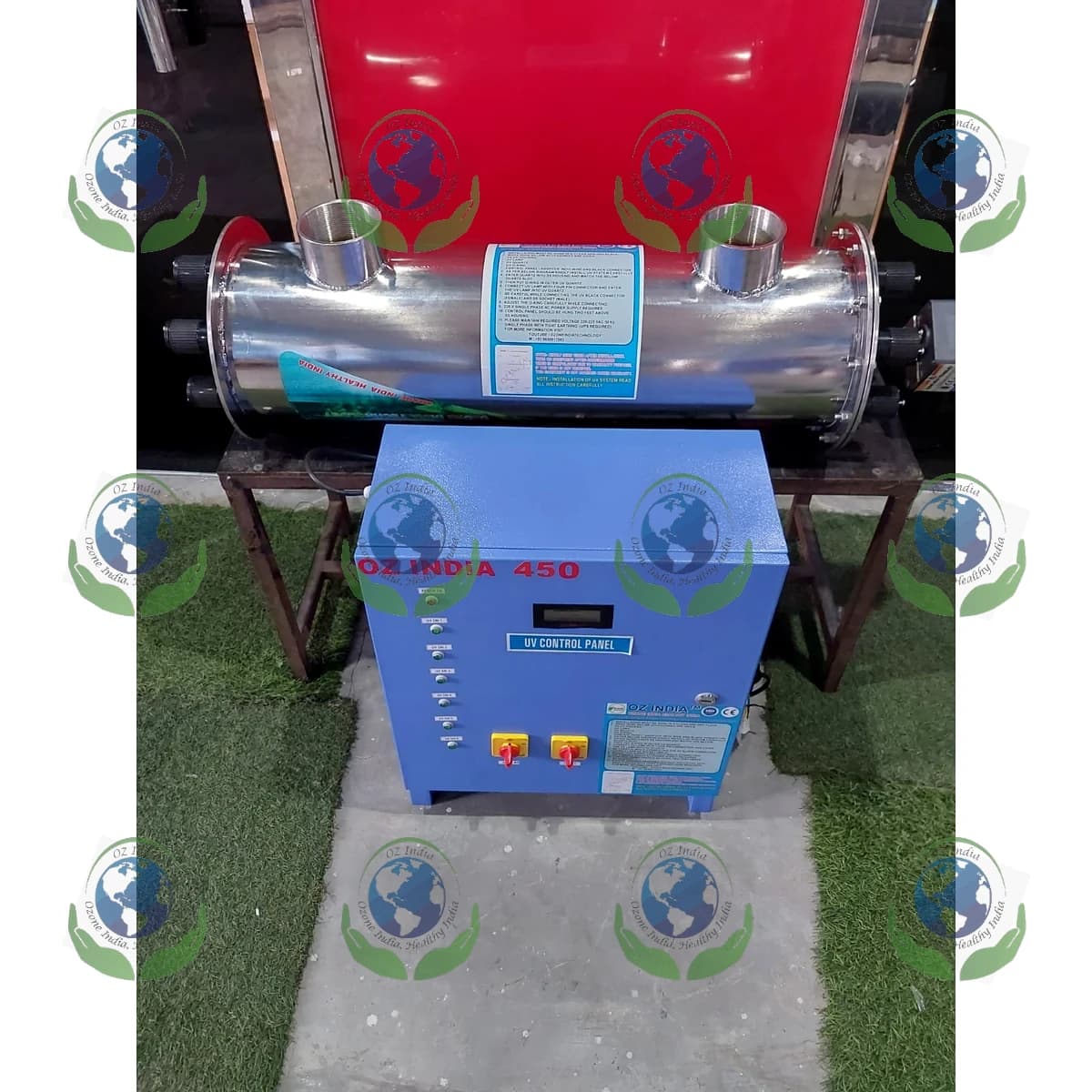
High-flow UV water treatment for pharmaceutical WFI, food & beverage process water, and industrial applications. Revised Schedule M 2025, HACCP, and FSSAI compliant. IQ/OQ/PQ documentation.
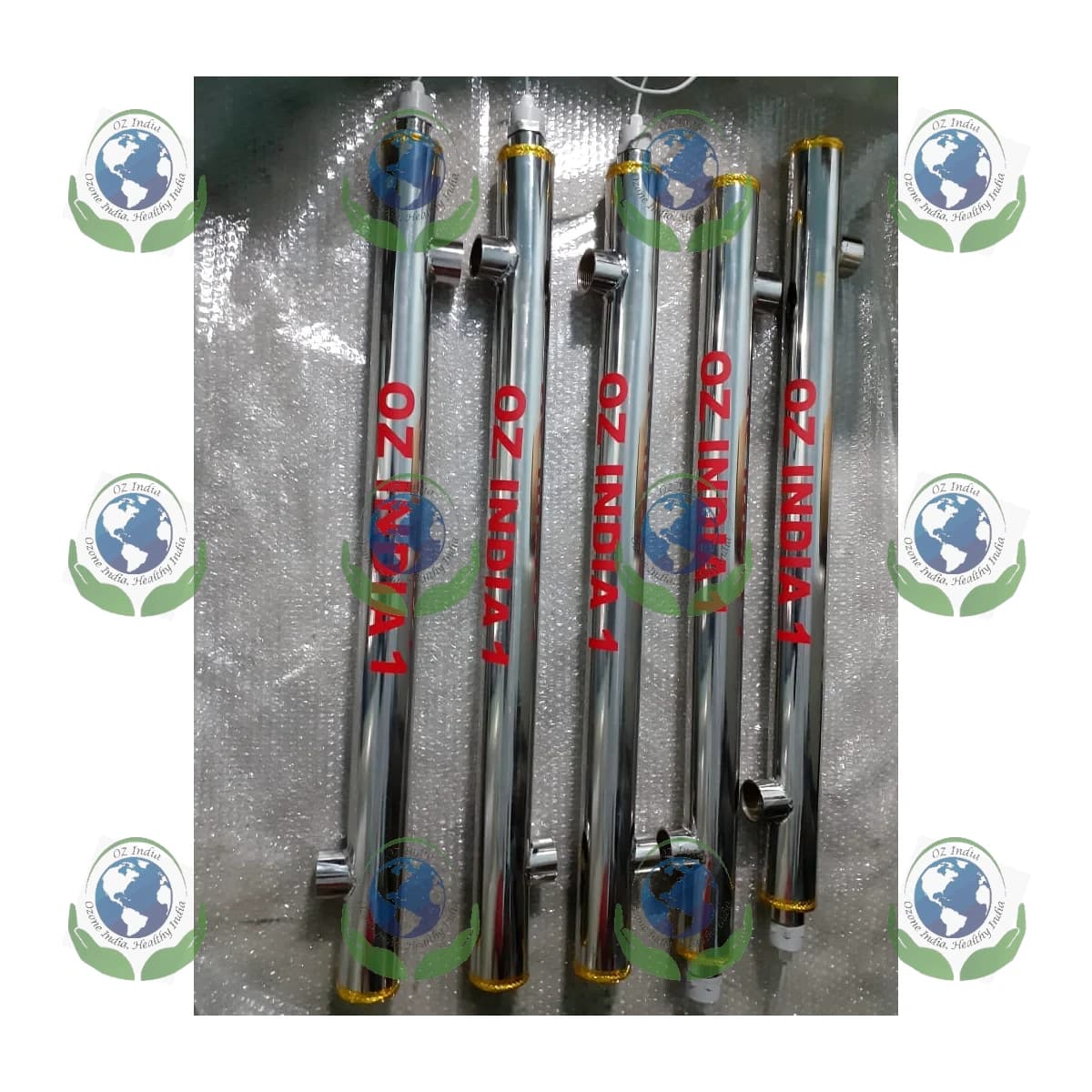
UV water disinfection for hotels, restaurants, offices, and educational institutions. HACCP and FSSAI compliant documentation. Trusted by Taj Hotels, McDonald's India, and IIT Kanpur.
IIT Patna Engineering
Alpha UV System IIT Patna engineers calculate UV dose from your actual water quality parameters — measured UVT, flow rate, target log reduction, and the specific compliance standard that governs your facility. Not from catalogue sizing tables or generic assumptions. Every system ships with a signed UV dose calculation report, a Philips certificate of authenticity, and compliance documentation prepared for the regulatory framework applicable to cooling tower uv operations.
From measured UVT, flow rate, and target log-reduction. Signed by IIT Patna engineer.
ASHRAE Standard 188 · WHO Legionella Guidelines · IS 10500 · CPCB — documentation prepared to the audit checklist, not generic templates.
WhatsApp your flow rate, water quality, and compliance requirement — engineering-backed quote in 2 hours.
Mon–Sat · 9 AM–6 PM IST · IIT Patna alumni on call
Send us your flow rate and compliance requirement — quote with engineering rationale in 2 hours.
+91 93183 05878
Get Quote →
Call Direct
+91 95995 00580
Tap to Call →
Send Enquiry
Detailed specifications form
Open Form →
